Postgrad Spain
How Apostille and Document Legalization Works for Spain
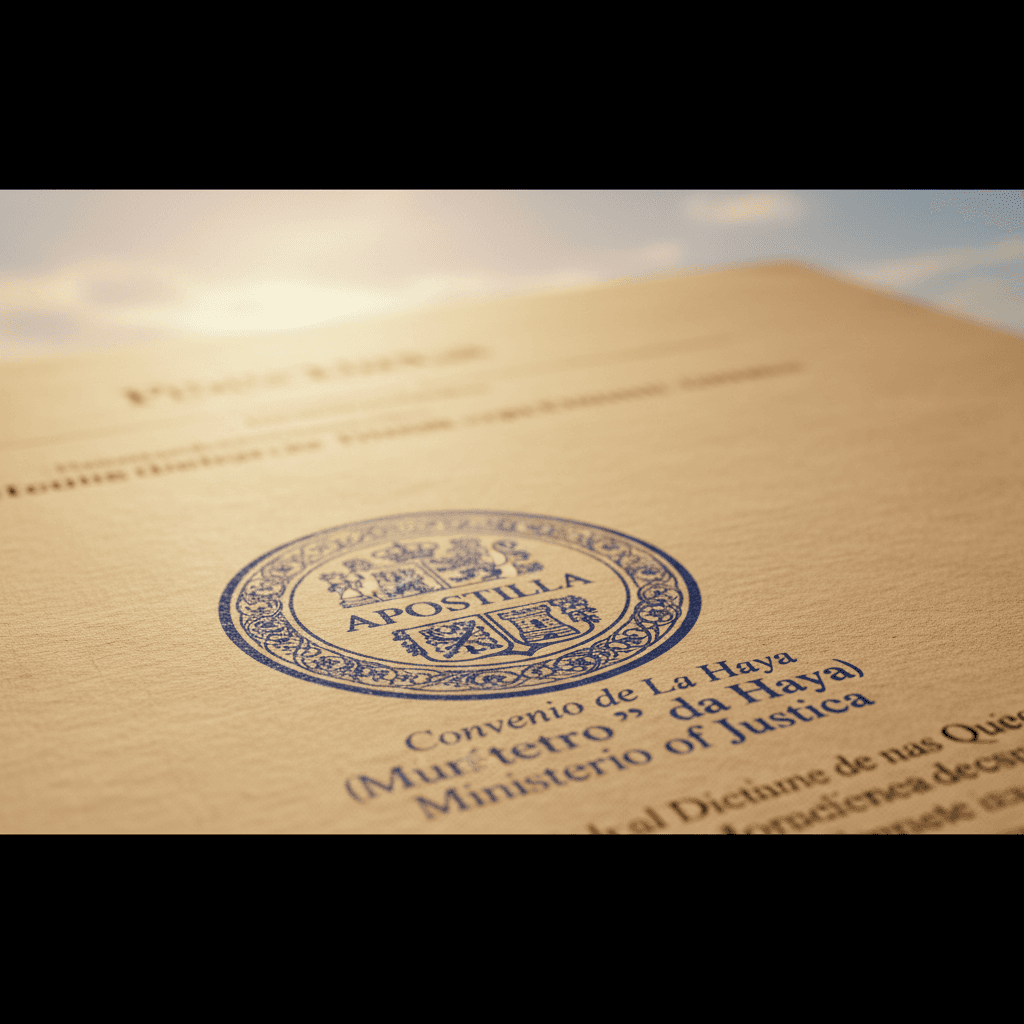
Before a Spanish university will accept your degree certificates, transcripts, or birth certificate, those documents must go through a formal authentication process. The two main routes — apostille and full diplomatic legalization — confuse almost every international applicant, and a mistake here can delay your enrollment by months.
This guide walks you through exactly which route applies to your country, what each step costs, how long it takes, and what Spanish institutions actually verify.
Why Spanish Universities Require Document Authentication
Spain's universities and the Spanish Ministry of Universities do not simply accept foreign documents at face value. The authentication requirement exists to confirm that:
- The issuing institution is real and recognized by the foreign country's authorities.
- The signatures and seals on the document are genuine.
- The document has not been altered.
This applies to all academic documents — undergraduate degrees, transcripts, secondary school certificates (bachillerato equivalent), and sometimes professional certifications. It also applies to identity documents like birth certificates when required for scholarship applications or NIE processing.
Route 1: The Apostille (Hague Convention Countries)
The Hague Convention of 5 October 1961 created the apostille as a simplified authentication method between member states. If both your country and Spain are members — which covers most of Latin America, the EU, India, China, Russia, Morocco, and many others — you need an apostille, not full legalization.
An apostille is a standardized certificate issued by a competent authority in your country. It is attached to or stamped on the original document and confirms the authenticity of the signature, the capacity of the signer, and the seal on the document.
Countries commonly using apostille for Spain
Region | Countries
Latin America | Argentina, Brazil, Chile, Colombia, Mexico, Peru, Ecuador, Venezuela, Bolivia, Paraguay, Uruguay, Dominican Republic, Panama, Costa Rica, Honduras, El Salvador, Guatemala, Nicaragua
Europe | All EU member states, UK, Russia, Ukraine, Georgia
Asia | India, China, Japan, South Korea, Philippines, Indonesia
Africa | Morocco, South Africa, Lesotho
Middle East | Oman, Bahrain
Always verify: Membership changes. Check the Hague Conference members list before starting the process.
Step-by-step apostille process
Step 1 — Obtain the original document
Request an official copy from your institution or government authority. Certified copies are often acceptable; photocopies are never acceptable. For degrees, this is usually the original parchment or a certified duplicate issued by the university's registrar.
Step 2 — Identify the competent apostille authority
Each country designates specific bodies to issue apostilles. Common authorities:
- Colombia: Ministerio de Relaciones Exteriores (Cancillería), online via tramites.cancilleria.gov.co
- Mexico: Secretaría de Relaciones Exteriores or state-level Secretarías
- India: Ministry of External Affairs, Regional Passport Offices, or state Home Departments (depending on the document type)
- Morocco: Ministère de la Justice, Cour d'Appel
- Argentina: Ministerio de Relaciones Exteriores, or provincial notary chambers for notarized docs
- China: Ministry of Foreign Affairs Authentication Office (or authorized provincial bureaus)
Step 3 — Submit the document
Most competent authorities accept documents in person or by mail. Some (Colombia, Mexico) now offer fully online apostille for digital documents. In-person processing is faster.
Step 4 — Receive the apostille
The apostille is either stapled to the original document or printed as a separate certificate referencing the document. It includes a unique serial number. Spanish universities may verify this number online via the e-APP system if your country participates.
Apostille costs and timelines
Country | Cost (approximate) | Typical turnaround
Colombia | COP 123,000 (≈ €28) | 1–3 business days (online)
Mexico | MXN 350–700 (≈ €17–35) | 1–5 business days
India (MEA) | INR 50 per document + service fee | 1–2 business days online
Morocco | MAD 200–400 (≈ €18–36) | 3–10 business days
Argentina | ARS 3,000–6,000 (≈ €8–15) | 3–5 business days
China | CNY 100–200 (≈ €13–26) | 5–10 business days
Route 2: Full Diplomatic Legalization (Non-Hague Countries)
If your country is not a member of the Hague Convention, or if the document type is excluded from apostille in your country, you need full diplomatic legalization. This is a multi-step chain of authentications.
Countries that commonly require full legalization for Spain include: Nigeria, Ghana, Kenya, Cameroon, Senegal, Ethiopia, Pakistan, Bangladesh, Cuba, and several Gulf states (UAE, Saudi Arabia, Kuwait — though these have been joining Hague in recent years; verify current status).
Full legalization steps
Step 1 — Notarization (if required)
Some documents must first be notarized by a local notary public in the issuing country.
Step 2 — Authentication by the national foreign affairs ministry
The document goes to the Ministry of Foreign Affairs or equivalent in your country, which authenticates the notary's or institution's signature.
Step 3 — Authentication by the Spanish Embassy or Consulate
The Spanish Embassy in your country then authenticates the foreign ministry's seal. This is the final step before the document is accepted in Spain.
Spanish Embassy contacts for legalization (selected):
- Nigeria (Abuja): Calle 5 de Agostura, Maitama — emb.abuja@maec.es
- Cameroon (Yaoundé): Rue 1820, Quartier Bastos — emb.yaounde@maec.es
- Pakistan (Islamabad): Street 6, Diplomatic Enclave — emb.islamabad@maec.es
- Saudi Arabia (Riyadh): Diplomatic Quarter — book via cita.maec.es
Full legalization costs and timelines: Budget €50–150 per document for embassy fees alone, plus national ministry fees. Timelines range from 2 to 8 weeks depending on the country. Always start this process at least 3 months before your application deadline.
Sworn Translation: The Step Most Applicants Miss
Once your document is apostilled or legalized, if it is not in Spanish, it must be translated by a sworn translator (traductor jurado) certified by Spain's Ministry of Foreign Affairs.
This is not optional. A regular certified translation from your home country is not accepted by Spanish universities for official admissions purposes.
What sworn translation means
A sworn translator in Spain is an individual officially certified by the Oficina de Interpretación de Lenguas of the Spanish Ministry of Foreign Affairs (MAEC). Their translations carry a legal signature and stamp recognized by Spanish institutions, courts, and government bodies.
Finding a sworn translator
The official list of sworn translators is published at maec.es. You can filter by language and country of residence. Many sworn translators work remotely and accept scanned apostilled documents by email.
Typical costs:
- Simple transcript (1–2 pages): €40–80
- University degree certificate: €50–100
- Birth certificate: €40–70
- Academic record (5+ pages): €100–200
Typical turnaround: 3–7 business days. Rush service (24–48 hours) is available from most translators at a 30–50% surcharge.
Languages most in demand
Spanish sworn translators are most abundant for English, French, Arabic, Portuguese, and Chinese. For less common languages (Bengali, Amharic, Hausa), the pool is smaller and lead times are longer — plan an extra 2–3 weeks.
What Spanish Universities Actually Verify
Universities differ in their verification depth, but here is what most Spanish public universities require:
Document | Apostille/Legalization Required? | Sworn Translation Required?
University degree | Yes | Yes (if not in Spanish)
Official transcript | Yes | Yes (if not in Spanish)
Secondary school certificate | Yes (for some programs) | Yes
English proficiency certificate | Usually no | No
Passport copy | No | No
Birth certificate | Sometimes (scholarships) | Yes
The UNED (Universidad Nacional de Educación a Distancia) also offers a degree equivalency service (homologación) for foreign degrees, which has its own documentation requirements. If you need official homologation (for regulated professions or public sector employment), this is a separate process from admissions.
Common Mistakes and How to Avoid Them
Mistake 1 — Apostilling a photocopy
Apostilles must be affixed to original documents or certified copies issued by the originating institution. A photocopy you made yourself is invalid, even if notarized.
Mistake 2 — Using a non-sworn translator
"Certified translation" from a translation agency in your home country does not equal a Spanish sworn translation. Always use a translator from the official MAEC list.
Mistake 3 — Apostilling before the document is complete
The apostille authenticates the document as it exists at the time of issuance. If you later add pages or get it re-stamped, you need a new apostille.
Mistake 4 — Ignoring document expiry
Some universities require apostilles issued within the last 6 months. Check the specific admissions requirements before requesting an apostille too early.
Mistake 5 — Waiting until after admission
Many applicants wait until they receive an admission letter to start authentication. This is too late. Processing an apostille + sworn translation for multiple documents takes 3–6 weeks on average. Start before you apply.
Recommended Timeline
Months before enrollment | Action
6+ months | Request original documents from your institution
5–6 months | Submit to competent apostille authority or begin legalization chain
4–5 months | Send apostilled documents to sworn translator
3–4 months | Submit completed application to Spanish university
2–3 months | Respond to any university requests for additional documentation
How Spain Postgrad Can Help
Document authentication is one of the top causes of application delays and rejections we see. We maintain an updated database of apostille authorities, sworn translators by language pair, and university-specific requirements. We also review your document checklist before you submit, catching errors before they cost you time.
See our full document checklist for Spanish university applications and our sworn translation requirements guide for more detail.
Summary
- Hague Convention country: Get an apostille from the designated authority in your country, then a sworn translation.
- Non-Hague country: Complete the full legalization chain (notary → foreign affairs ministry → Spanish embassy), then a sworn translation.
- Always use a sworn translator certified by Spain's Ministry of Foreign Affairs (MAEC list).
- Start at least 3 months before your application deadline — 6 months is safer.
- Verify current Hague membership and specific university requirements before starting.
The paperwork is manageable when you know the rules. If you want a personalized document checklist for your specific country and target university, book a free 15-minute consultation and we will walk you through exactly what you need.