Postgrad Spain
Documents You Need for a Spanish University Application
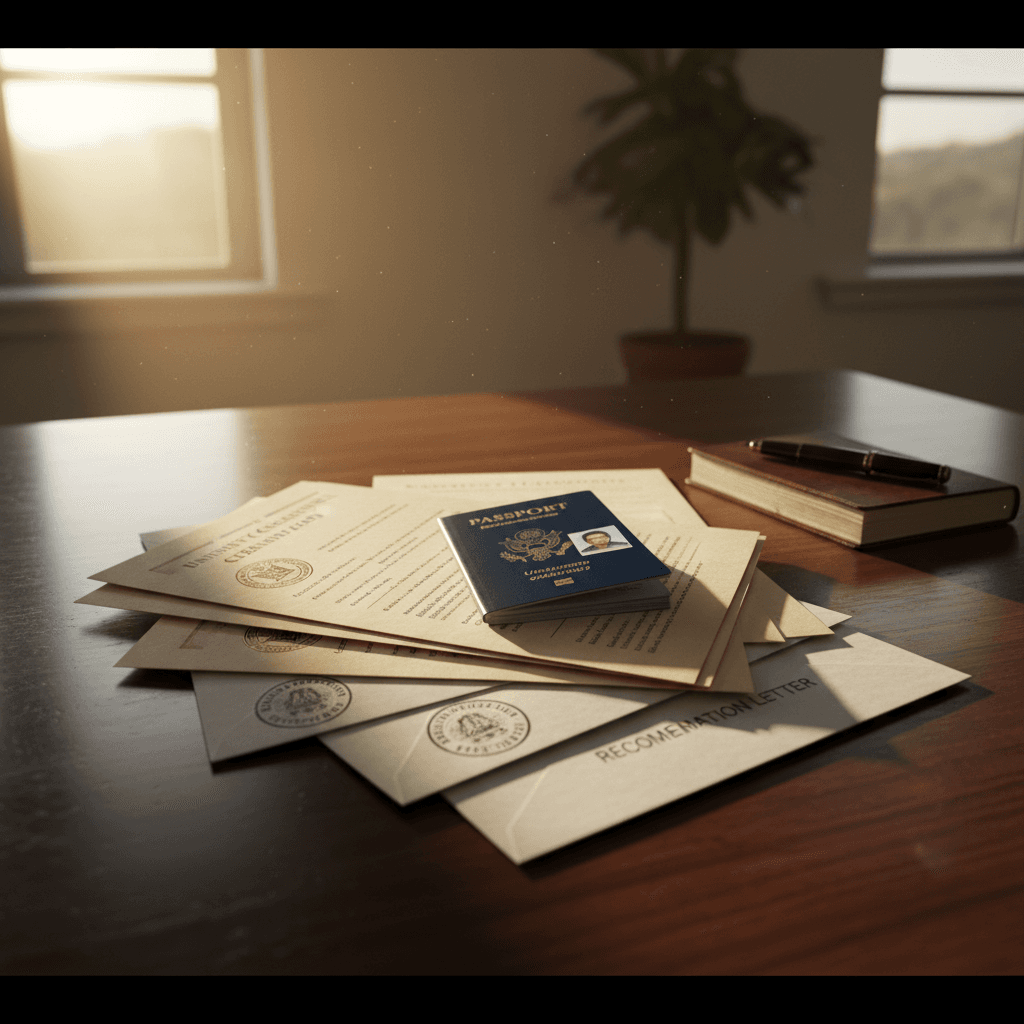
One of the most frustrating parts of applying to a Spanish university is discovering — sometimes days before a deadline — that you are missing a document, that it needs to be in a specific format, or that it requires an apostille or sworn translation you did not plan for.
This guide lists every document you are likely to need for a postgraduate application in Spain, explains the format and copy requirements, and highlights where international students most commonly run into problems. Treat it as your checklist.
Keep in mind that requirements vary between universities and even between programs at the same institution. Always verify the specific requirements on the program's official page. This guide covers the standard set that applies to the vast majority of applications.
1. Passport
What is required: A clear photocopy or scan of the biographical data page of your valid passport.
Key details:
- Your passport must be valid for at least 6 months beyond your planned entry date into Spain
- If your passport is expiring soon, renew it before starting the application process. Passport renewals can take 2-8 weeks depending on your country
- Some universities also require a scan of any pages with stamps or visa entries
Format: Color PDF scan, high resolution. Most university portals accept uploads up to 5-10 MB.
2. Official Academic Transcripts
What is required: Your complete academic record showing all courses taken, credits earned, grades received, and the grading scale used.
Key details:
- Transcripts must be official — issued directly by your university, with an institutional seal or stamp, not a self-printed version from a student portal
- If you are still completing your degree, submit a provisional transcript with courses completed to date and a note indicating expected graduation date
- Some Spanish universities require transcripts to show the total number of credit hours and the grading scale with an explanation (e.g., what constitutes a pass, distinction, or fail in your system)
Format and copies:
- Digital: PDF format, uploaded to the application portal
- Physical: Some universities require original transcripts sent by post in a sealed envelope from your institution
- Number of copies: 1 digital copy for each application; if physical copies are required, order 2-3 extra from your university to avoid delays
Apostille/legalization: Transcripts from non-EU countries typically require an apostille (if your country is a Hague Convention signatory) or consular legalization (if not). See our guide on apostille and document legalization.
Sworn translation: If your transcripts are not in Spanish, English, or French (acceptance of English/French varies by university), you will need a sworn translation (traduccion jurada) into Spanish by a translator certified by the Spanish Ministry of Foreign Affairs.
3. Degree Certificate or Diploma
What is required: An official copy of your undergraduate degree certificate (and master's degree, if applicable to your program).
Key details:
- This is separate from your transcript. The degree certificate confirms that you have been awarded the degree
- If you have not yet graduated at the time of application, most universities accept a provisional certificate or letter from your institution confirming that you are expected to graduate before the program's start date. You will need to provide the final certificate before or shortly after enrollment
- The degree title must match the field of study required by the program. Some programs have specific prerequisite degrees
Apostille/legalization: Same requirements as transcripts — apostille for Hague Convention countries, consular legalization for others.
Sworn translation: Required if the document is not in Spanish (or, at some universities, English or French).
4. Language Certificate
What is required: Proof of proficiency in the language of instruction.
For Spanish-Taught Programs
Certificate | Common Minimum Level
DELE (Diploma de Espanol como Lengua Extranjera) | B2 (most programs), B1 (some with conditions)
SIELE (Servicio Internacional de Evaluacion de la Lengua Espanola) | B2 equivalent score
University placement test | Some universities offer their own language assessment during enrollment
For English-Taught Programs
Certificate | Common Minimum Score
IELTS Academic | 6.0-6.5 overall (varies by program)
TOEFL iBT | 80-95 (varies by program)
Cambridge C1 Advanced (CAE) | Grade B or above
Duolingo English Test | Accepted by some programs, 105-120
Key details:
- Certificates are typically valid for 2 years from the date of the test
- If you are a native speaker of the instruction language, some universities waive the certificate requirement — but not all. Check with each institution
- If you need to take a test, register early. DELE exam dates are limited (typically May, July, and November), and IELTS/TOEFL slots fill up in testing centers
Format: PDF of the official result, or the institution code for direct score submission (IELTS, TOEFL).
5. Curriculum Vitae (CV)
What is required: A structured summary of your academic background, research experience, publications (if applicable), professional experience, and relevant skills.
Key details:
- Use an academic CV format if applying to research-oriented programs: focus on education, publications, conferences, research projects, and academic awards
- Use a professional CV format if applying to professionally-oriented programs (MBA, professional master's): focus on work experience, skills, and career progression
- Length: 1-2 pages for most applications. PhD applications may justify 3-4 pages if you have extensive publications or research experience
- Include the program-relevant information prominently. A generic CV is less effective than one tailored to the specific program
Format: PDF, clearly formatted. Avoid templates with excessive graphics or columns that may not render well in portal uploads.
6. Motivation Letter / Statement of Purpose
What is required: A written statement (typically 500-1,000 words) explaining why you want to pursue this specific program, what you bring to it, and what you intend to do after completing it.
Key details:
- Be specific. Generic statements that could apply to any program are not persuasive. Reference the specific curriculum, faculty members, or research groups that attract you to this program
- Connect your background to the program. Explain how your previous studies or professional experience prepare you for this master's
- State your goals. Admissions committees want to know you have thought about what comes after the degree — whether it is a PhD, a career transition, or a specific professional role
- Keep the tone professional but genuine. Avoid overly formal or flowery language. Write clearly and directly
Format: PDF document, or text field within the application portal. Follow the specific word/character limit if one is given.
Common mistakes:
- Writing the same letter for every program and forgetting to change the university or program name
- Focusing entirely on your past achievements without explaining what you want from the program
- Making vague statements about wanting to "broaden your horizons" or "gain international experience" without specifics
7. Letters of Recommendation
What is required: Typically 1-2 letters from academic supervisors, professors, or (for professional programs) employers who can speak to your qualifications.
Key details:
- Ask early. Give your recommenders at least 3-4 weeks notice. Rushed letters tend to be generic
- Provide context. Send your recommenders the program description, your CV, and a brief explanation of why you are applying. This helps them write a more specific and relevant letter
- Academic vs professional recommenders: For research-oriented programs, prioritize professors or thesis supervisors. For professional programs, a mix of academic and professional recommenders is often ideal
- Submission method: Some universities ask recommenders to submit letters directly via a portal or email. Others accept letters uploaded by the applicant in a sealed, signed format
Format: PDF on institutional letterhead, signed by the recommender. Include the recommender's full name, title, institution, and contact information.
Number: Most programs require 2 letters. Some require 1, and some PhD applications may request 3. Check each program's requirements.
8. Passport-Sized Photographs
What is required: Recent passport-sized photographs meeting standard requirements.
Key details:
- Specifications: Typically 35mm x 45mm (European standard), white background, face clearly visible, no glasses (some consulates), recent (taken within the last 6 months)
- Quantity: 2-4 photographs. Some are for the application; others will be needed later for your NIE/TIE card and student ID
- Digital version: Some application portals require a digital upload of your photo. Ensure it meets the resolution and file size requirements
Tip: Get these taken at a professional photo shop that is familiar with passport/visa photo requirements. Phone selfies or informal photos will be rejected.
9. Additional Documents (Program-Specific)
Depending on the program, you may also need:
Research Proposal (PhD and Research Master's)
- A preliminary research proposal (2-5 pages) outlining your intended research topic, methodology, and relevance. Required for most PhD applications and some research-intensive master's programs
Portfolio (Design, Architecture, Arts)
- A curated portfolio of your work, typically 10-20 pages in PDF format. Follow the program's specific guidelines for format and content
Professional Certifications
- Relevant professional certifications (project management, accounting, IT certifications) for professionally-oriented programs
Financial Documentation
- Some programs (particularly private universities) require proof of ability to pay tuition as part of the application, separate from the visa financial requirements
GRE/GMAT Scores
- Uncommon for Spanish universities but occasionally required by business schools and some economics programs. Check each program individually
Document Preparation Checklist
Use this checklist to track your progress:
Document | Obtained | Apostilled/Legalized | Translated | Uploaded/Sent
Passport (valid 6+ months) | | N/A | N/A |
Official transcripts | | | |
Degree certificate | | | |
Language certificate | | N/A | N/A |
CV | | N/A | N/A |
Motivation letter | | N/A | N/A |
Recommendation letters (x2) | | N/A | N/A |
Passport photos (x4) | | N/A | N/A |
Additional (program-specific) | | | |
Common Mistakes and How to Avoid Them
Starting document collection too late. Apostilles, sworn translations, and official transcript requests each take 1-4 weeks. Start gathering documents at least 2-3 months before your first application deadline.
Submitting unofficial documents. A transcript printed from your student portal is not an official transcript. An unsigned recommendation is not valid. Ensure every document meets the "official" standard the university expects.
Forgetting the sworn translation. A regular translation is not the same as a traduccion jurada. Sworn translations in Spain must be done by a translator accredited by the Ministry of Foreign Affairs. This is a non-negotiable requirement for most non-Spanish documents.
Not checking program-specific requirements. Two programs at the same university may require different documents. Always check the specific program page, not just the general admissions page.
Running out of copies. If you are applying to multiple universities, you may need multiple original transcripts and degree certificates. Order extras from your institution early.
Conclusion
Document preparation is the most administrative part of applying to a Spanish university, but it is also the most controllable. Unlike admission decisions (which are out of your hands), getting your documents right is entirely within your power.
Start early, verify requirements for each specific program, and build in extra time for apostilles and sworn translations. If you are applying from a non-EU country, assume that every academic document will need both an apostille and a sworn translation, and budget accordingly in both time and money.
At Postgrado Espana, we help students navigate the documentation process for Spanish university applications. Book your free 15-minute consultation and get clarity on exactly what your target programs require.