Postgrad Spain
Driving in Spain: License Exchange and Rules for Students
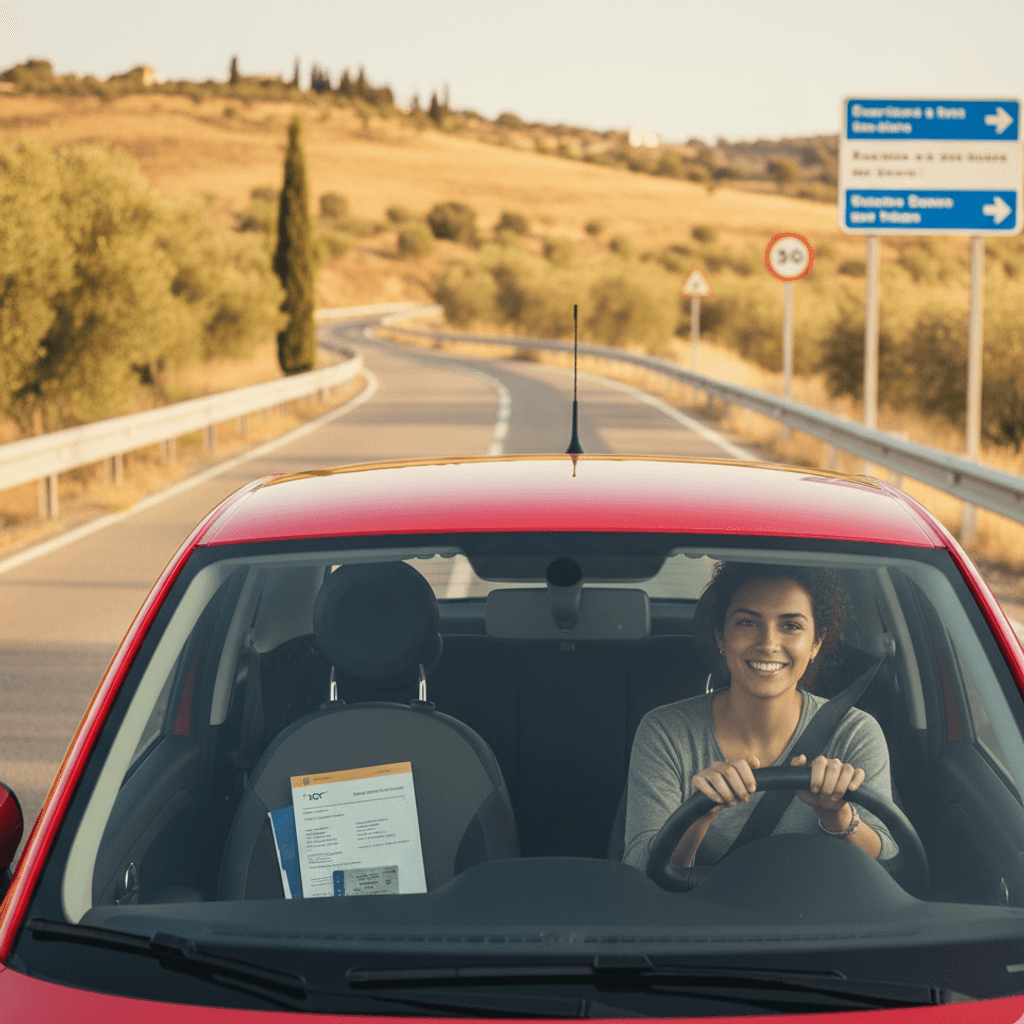
Most international students in Spain do not need a car — public transport in cities like Madrid, Barcelona, Valencia, and Seville is excellent and affordable. But if you plan to explore rural Spain, do weekend trips, or live in a smaller town without great bus connections, knowing the rules about driving with a foreign license is important.
This guide covers when you can use your existing license, when and how to exchange it, and the Spanish traffic rules you need to know.
Sorting out your admin in Spain? From driving licenses to bank accounts to empadronamiento, we help you navigate the process. Message us on WhatsApp.
Can You Drive in Spain With Your Foreign License?
The short answer: it depends on where your license was issued and how long you are staying.
EU/EEA Licenses
If your driving license was issued in an EU or EEA country, you can drive in Spain with it indefinitely, as long as it remains valid. No exchange is needed. When it expires, you renew it through Spanish procedures (at the DGT — Direccion General de Trafico).
Non-EU Licenses: The 6-Month Rule
If your license was issued in a non-EU country, you can drive in Spain for up to 6 months from the date you become a resident (i.e., from your entry date or the date on your empadronamiento, depending on interpretation).
After 6 months, your foreign license is no longer valid in Spain. You must either:
- Exchange it (canje) for a Spanish license — if your country has a bilateral agreement with Spain
- Take the Spanish driving test — if your country does NOT have an exchange agreement
International Driving Permit (IDP)
An International Driving Permit (IDP or Permiso Internacional de Conduccion) is a standardized translation of your license. It does NOT extend the 6-month validity of your foreign license. It simply makes your license easier for Spanish police to read.
When you need an IDP:
- If your license is not in Spanish or another Latin-alphabet language
- If you are driving in Spain for less than 6 months and want to avoid confusion at traffic stops
Where to get one: From your home country's automobile association (AAA in the US, RAC in the UK, etc.) before you travel. You cannot get an IDP in Spain for a foreign license.
License Exchange (Canje): Countries With Agreements
Spain has bilateral agreements that allow direct license exchange (canje) with certain countries. If your country is on the list, you can swap your foreign license for a Spanish one without taking any tests.
Countries With Exchange Agreements (Partial List)
- EU/EEA countries (automatic)
- Algeria, Argentina, Bolivia, Brazil, Chile, Colombia, Dominican Republic, Ecuador, El Salvador, Guatemala, Japan, Morocco, Paraguay, Peru, Philippines, Serbia, South Korea, Switzerland, Tunisia, Turkey, Ukraine, Uruguay, Venezuela
Note: Agreements can change. Check the DGT website for the current list before starting the process.
Countries WITHOUT Exchange Agreements
If your country is not on the list (including the United States, Canada, China, India, Russia, and most of Africa and Asia), you cannot exchange your license. You must take the Spanish driving test to get a Spanish license. This includes both a theory exam and a practical driving test.
How to Exchange Your License (Canje Process)
If your country has an exchange agreement with Spain:
Documents Needed
- Application form (available at DGT offices or online)
- Valid passport (original + photocopy)
- NIE/TIE (original + photocopy)
- Empadronamiento certificate (proving your address in Spain)
- Your foreign driving license (original — you will surrender it during the process and receive it back later in most cases)
- Official translation of your license by a traductor jurado (sworn translator) — if the license is not in Spanish
- Medical certificate (certificado medico de aptitud) from an authorized centro de reconocimiento de conductores (driver's medical examination center) — costs approximately EUR 30-50
- Fee payment (tasa DGT — approximately EUR 28)
- Recent passport-sized photo (32x26mm, white background)
Step by Step
- Get your medical certificate: Visit a centro de reconocimiento de conductores (these are private medical centers authorized by the DGT — you will find them near DGT offices). The exam includes vision, hearing, and basic coordination tests. Takes about 20 minutes.
- Get your license translated (if not in Spanish): Use a traductor jurado registered with the Spanish Ministry of Foreign Affairs.
- Book a cita previa at the DGT: Through the DGT website. Select "Canjes de permisos de conduccion."
- Attend your appointment: Bring all documents listed above.
- Surrender your foreign license: The DGT keeps your original foreign license during processing. In most cases, they return it to your country's consulate, where you can retrieve it later.
- Receive your Spanish license: Processing takes 2-6 weeks. You may receive a temporary driving authorization while waiting.
Taking the Spanish Driving Test
If your country does not have an exchange agreement, you need to take the Spanish test:
Theory Exam (Examen Teorico)
- Format: 30 multiple-choice questions. You need 27 correct answers (90%) to pass.
- Language: Available in Spanish and English (and sometimes other languages — check with your DGT office)
- Content: Spanish traffic regulations, road signs, priority rules, speed limits, and safe driving practices
- Study materials: Official DGT test preparation apps and books are available
- Fee: Approximately EUR 95
Practical Exam (Examen Practico)
- Format: A driving test with a DGT examiner in a real car on real streets
- Duration: About 25 minutes
- What they evaluate: Vehicle control, lane positioning, use of mirrors, speed management, adherence to traffic rules
- Fee: Approximately EUR 95 (in addition to the theory fee)
- Car: You need to provide the car (most students hire one through a driving school — autoescuela)
Driving Schools (Autoescuelas)
Most students who need to take the Spanish test enroll in an autoescuela (driving school). They provide:
- Theory classes and exam preparation
- Practical driving lessons
- A car for the practical exam
- Exam appointment booking
Cost: EUR 300-800 for a complete package (theory + practical), depending on the city and how many practice hours you need.
Spanish Traffic Rules You Need to Know
Whether you are driving on your foreign license or a Spanish one, these are the rules that catch international drivers off guard:
Speed Limits
Road Type | Speed Limit
Urban areas | 30-50 km/h (30 in residential zones, 50 on main urban roads)
Secondary roads | 90 km/h
Highways (autovias) | 120 km/h
Alcohol Limits
- General drivers: 0.5 g/L in blood (0.25 mg/L in breath)
- New drivers (less than 2 years experience): 0.3 g/L in blood (0.15 mg/L in breath)
- Penalties for exceeding limits are severe: fines from EUR 500-1,000 and license points deduction
Other Key Rules
- Seatbelts: Mandatory for all passengers, front and back.
- Mobile phones: Using a handheld phone while driving is illegal. Fines start at EUR 200.
- Roundabouts: Vehicles inside the roundabout have priority (same as most of Europe).
- Pedestrian crossings: You must stop for pedestrians at unmarked and marked crossings.
- Reflective vest: You must carry a reflective vest in the car and wear it if you exit the vehicle on the roadside.
- Warning triangles: You must carry two warning triangles (or the newer V-16 emergency light, which is gradually replacing triangles).
- Parking: Many cities have color-coded parking zones — blue (paid limited-time), green (resident priority), white (free).
Toll Roads
Some highways in Spain are toll roads (autopistas de peaje). Tolls are paid at booths or electronically via Telepeaje (similar to E-ZPass or other electronic toll systems). Free alternatives (autovias) usually exist but may take longer.
Do You Actually Need to Drive?
For most international students in major Spanish cities, the answer is no. Here is why:
- Urban public transport (metro, bus, tram) is extensive, reliable, and cheap. Monthly passes range from EUR 20-50 depending on the city and age discounts.
- Intercity travel: Renfe (trains), BlaBlaCar (ride-sharing), and FlixBus cover most routes affordably.
- Car sharing: Services like Zity, Wible, and Share Now are available in Madrid and other cities for occasional use.
- Cycling: Many Spanish cities have expanding bike-sharing systems and dedicated bike lanes.
When a car makes sense:
- You live in a small town or rural area with limited public transport
- You want to explore the countryside, national parks, or coastal areas not served by buses or trains
- You are doing fieldwork or research at remote locations
Complete admin setup — we handle the appointments. Whether it is a license exchange, NIE, or empadronamiento, our team navigates the bureaucracy with you. Get in touch.
Common Mistakes to Avoid
- Driving after 6 months on a non-EU license without exchanging it. Your license becomes invalid, and you are technically driving without a license — a serious offense.
- Assuming your IDP extends your driving rights. It does not. The IDP is a translation document, not an extension of validity.
- Not getting the medical certificate before your DGT appointment. You need it at the appointment — it cannot be done after.
- Ignoring Spanish urban speed limits. Many cities have reduced limits to 30 km/h in residential areas. Speed cameras are common and fines are automatic.
- Drinking and driving. Enforcement is strict, especially during holiday periods and weekend nights. Use public transport, taxis, or ride-sharing apps.
- Not carrying required safety equipment. Reflective vest and warning devices must be in the car. Random police checks can result in fines if you do not have them.
Key Contacts
Contact | Purpose
DGT (Direccion General de Trafico) | License exchange, driving tests, traffic regulations
DGT cita previa | sede.dgt.gob.es
112 | Emergency services (accidents)
Your insurance company | Accident reporting, roadside assistance
Complete admin setup — we handle the appointments. From driving licenses to bank accounts to healthcare, our team makes your admin manageable. Start your setup.
Driving is just one piece of settling in. See our guides on empadronamiento, NIE, and TIE and the Spanish bureaucracy survival guide for more practical tips on navigating life in Spain.