Postgrad Spain
Rental Scams in Spain: How to Spot Them and Protect Yourself
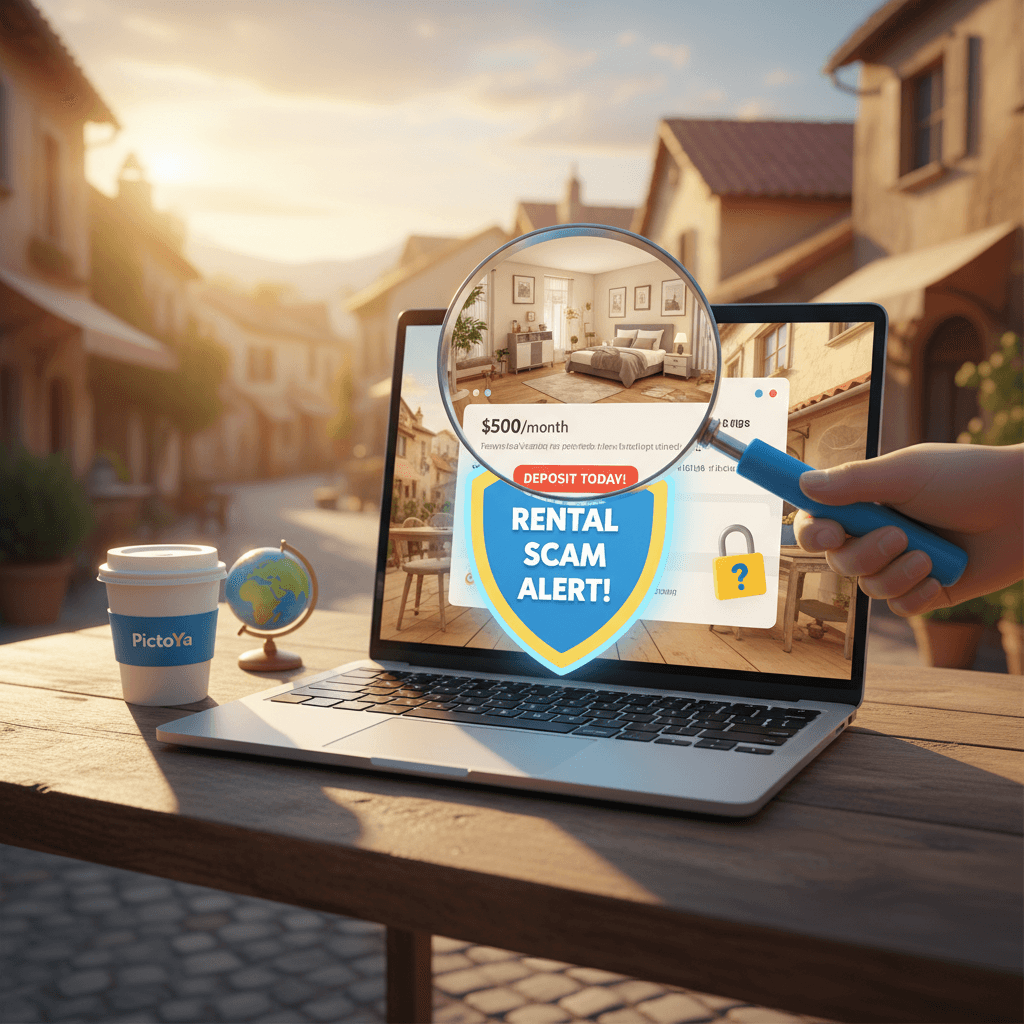
Every year, hundreds of international students lose money to rental scams in Spain. The combination of remote searching, urgency, unfamiliarity with the local market, and language barriers creates the conditions that scammers exploit.
This is not about being naive. Smart, experienced people fall for these schemes because they are well-crafted and target the specific vulnerabilities of someone searching from abroad under time pressure.
This guide walks you through the most common scam types, the red flags to watch for, concrete verification steps, and what to do if you have already been targeted.
Why International Students Are Targeted
Scammers focus on international students because:
- You are searching from another country. You cannot visit the property in person, which removes the most basic verification step.
- You are under time pressure. Your visa, your enrollment, your plans all depend on having a place to live. This urgency makes you more willing to take risks.
- You are unfamiliar with Spanish rental norms. You may not know what a typical price looks like, what a legitimate contract contains, or what questions to ask.
- You may not speak Spanish fluently. Communication barriers make it harder to assess whether a landlord is legitimate.
- You have limited local contacts. No friend or family member can check the property for you.
The peak scam season is July through September, when the student housing market is at its most competitive and demand outstrips supply in cities like Madrid, Barcelona, and Valencia.
The Seven Most Common Rental Scams
1. The "I'm Abroad" Scam
How it works: You respond to a listing. The "landlord" replies that they are currently in another country (London, Dubai, Brussels) and cannot show the flat. They offer a detailed backstory — they are a professor, a diplomat, an engineer. They send you photos (often stolen from real listings or Airbnb). They ask you to wire a deposit via Western Union, MoneyGram, Bizum, or cryptocurrency so they can "send you the keys by courier."
The outcome: You send money. The keys never arrive. The person disappears.
The rule: If someone cannot show you the property or arrange for someone local to do so, and asks for money before you have seen it — this is a scam. No legitimate landlord in Spain operates this way.
2. Fake Listings with Stolen Photos
How it works: Scammers copy photos from real Idealista or Airbnb listings and repost them on Milanuncios, Facebook groups, or even other portals with a below-market price. The listing looks professional because the photos are real — they just do not belong to the person posting.
Red flags:
- The price is 20-40% below comparable listings in the same neighborhood
- The description is vague, generic, or has grammar inconsistencies
- The contact email is a free provider (Gmail, Outlook) with no phone number
- Reverse image search (Google Images) shows the photos appear on other sites
Protection: Always reverse-image-search the listing photos. If they appear elsewhere under a different name, listing, or platform, walk away.
3. Upfront "Reservation" Fees
How it works: An "agency" or "landlord" asks you to pay a "reservation fee" (EUR 200-500) before you have seen the property or signed a contract. They claim it holds the flat for you while other people are also interested. Once you pay, they become hard to reach or the flat "falls through."
The rule: No legitimate agency or landlord requires payment before you have visited the property (or had it verified on your behalf) and signed a written contract. Any fee demanded before a signed contract is a red flag.
4. Phantom Landlords (Fake Owners)
How it works: Someone who is renting or subletting a property poses as the owner. They collect your deposit and first month's rent, give you keys that work (because they are a current tenant or have a copy), and disappear. Weeks later, the actual owner or their agent contacts you to demand payment — because the person you paid had no authority to rent the property.
Protection: Request a nota simple from the Registro de la Propiedad. This document shows who legally owns the property. It costs about EUR 9 and can be obtained online. The person who signs your contract should match the owner listed, or should have a documented power of attorney (poder notarial) from the owner.
5. Bait-and-Switch Properties
How it works: You arrange to visit a flat. On arrival, the agent tells you it was "just rented" but they have another property available — usually in a worse location or at a higher price. This is a pressure tactic.
The rule: If the original flat is not available, leave. Do not view the substitute under pressure. A legitimate agent will have confirmed availability before your visit.
6. Deposits to Unsecured Channels
How it works: Everything seems legitimate — the flat exists, you visit it, the landlord seems real. But they ask you to send the deposit via Bizum, cash, or a personal transfer before the contract is signed, promising to "do the paperwork later."
The risk: Without a signed contract, you have minimal legal recourse if they keep your money or change the terms. The deposit is not registered with the regional housing authority (as required by law for the fianza), and there is no paper trail.
The rule: Sign the contract first. Transfer the deposit by bank transfer to the account specified in the contract. Request proof that the fianza has been deposited with the autonomous community's housing authority.
7. Illegal Sublets Presented as Rentals
How it works: A current tenant sublets their room or flat to you without the landlord's permission. The lease says subletting is prohibited. You move in, and the landlord discovers the arrangement and begins eviction proceedings — against the original tenant and, by extension, against you.
Protection: Ask to see the original lease. Check whether it allows subletting. If the person renting to you is not the owner, ask for the owner's written authorization for the sublet.
Red Flags Checklist
Before responding to any listing or sending any money, check for these warning signs:
- Price too good to be true: Significantly below market for the neighborhood and size
- Owner is abroad: Cannot show the property and asks for remote payment
- Urgency pressure: "Other people are interested," "I need the deposit today"
- Payment before contract: Any money requested before a written agreement is signed
- Non-traceable payment methods: Western Union, MoneyGram, cryptocurrency, cash-only
- Refuses to provide ID: A legitimate landlord will share their DNI/NIE for the contract
- No contract offered: Anyone renting without a written contract is either a scammer or operating illegally — either way, do not proceed
- Vague property details: Cannot provide the exact address, or avoids questions about the building
- Refuses empadronamiento: If a landlord says they will not cooperate with your municipal registration, this signals an undeclared rental or other irregularity
- Stock-quality photos with no personal touches: Professional photos with no signs of habitation can indicate stolen images
If even one of these applies, proceed with extreme caution. If two or more apply, walk away.
How to Verify a Listing
Step 1: Reverse Image Search
Right-click any listing photo and select "Search image with Google." If the photo appears on Airbnb, other rental platforms, or unrelated websites, the listing is using stolen images.
Step 2: Check the Registro de la Propiedad
Request a nota simple informativa from the Registro de la Propiedad. This public document confirms:
- Who owns the property
- Whether there are liens or mortgages
- The property's official description
Cost: approximately EUR 9. Processing time: 24-48 hours online.
Step 3: Verify the Address
Use Google Maps and Street View to confirm the building exists, matches the photos, and is located where the listing claims. Check that the building has the correct number of floors and balconies.
Step 4: Request the Cedula de Habitabilidad
This certificate confirms the property meets minimum habitability standards. Not all autonomous communities require it for rentals, but a legitimate landlord should be able to provide one or explain why they do not have it.
Step 5: Verify the Landlord's Identity
Before signing, ask for:
- The landlord's DNI (for Spanish nationals) or NIE (for foreign owners)
- If they are not the owner, a power of attorney (poder notarial) authorizing them to rent the property
- Cross-reference with the nota simple from Step 2
Step 6: Use a Trusted Platform's Escrow
If you are booking from abroad and cannot visit, consider platforms like HousingAnywhere or Spotahome. These hold your payment in escrow until you confirm the property matches the listing. The platform fee (typically 10-20% of first month's rent) acts as insurance.
What to Do If You Have Been Scammed
If you have already sent money and suspect fraud:
- File a police report (denuncia): Go to the nearest Policia Nacional station or file online at denuncia-online. Bring all documentation — messages, transfer receipts, listings, emails.
- Contact your bank: If you paid by bank transfer, request a recall. If by credit card, initiate a chargeback. Success rates vary, but acting within 24-48 hours improves your chances.
- Report the listing: Flag the listing on the platform where you found it (Idealista, Fotocasa, Facebook). This helps protect other students.
- Contact your university's international office: Many universities have legal advice services or can connect you with organizations that help fraud victims.
- Report to consumer protection: File a complaint with the Oficina Municipal de Informacion al Consumidor (OMIC) in the municipality where the property is (or was claimed to be) located.
Do not feel ashamed. Rental scam victims include locals, professionals, and long-term residents. The scammers are sophisticated, and reporting helps others.
Safe Payment Practices
Method | Safety Level | Notes
Bank transfer after signed contract | Recommended | Creates traceable record, contract provides legal basis
Platform escrow (HousingAnywhere, Spotahome) | Recommended | Payment held until you confirm property matches listing
Bizum after signed contract | Acceptable | Traceable but less formal than bank transfer
Cash with signed, dated receipt | Acceptable (last resort) | Only if receipt specifies amount, concept, and parties
Western Union / MoneyGram | Never | No traceability, no recall possible
Cryptocurrency | Never | Irreversible and untraceable
Bizum or cash before contract | Never | No legal protection without a signed agreement
The fundamental rule: Sign first, pay second. Always by traceable method. Always with documentation.
Key Takeaways
- Scammers target international students because you are searching remotely, under time pressure, and unfamiliar with local norms
- The most common scam is the "I'm abroad" scheme — never send money to someone who cannot show you the property
- Verify every listing: reverse image search, nota simple from the Registro de la Propiedad, Google Street View, landlord ID
- Never pay before signing a written contract
- Use platform escrow services if booking from abroad
- If scammed, file a denuncia immediately and contact your bank within 24-48 hours
Your housing search should be stressful enough without worrying about fraud. Taking verification steps adds a day or two to your process but can save you thousands of euros and months of disruption.
Have you received a listing that feels suspicious? Our team reviews rental listings and contracts for international students across Spain. Send us the details and we will help you verify it before you commit any money.