Postgrad Spain
Complete Guide to Studying in Valencia as an International Student
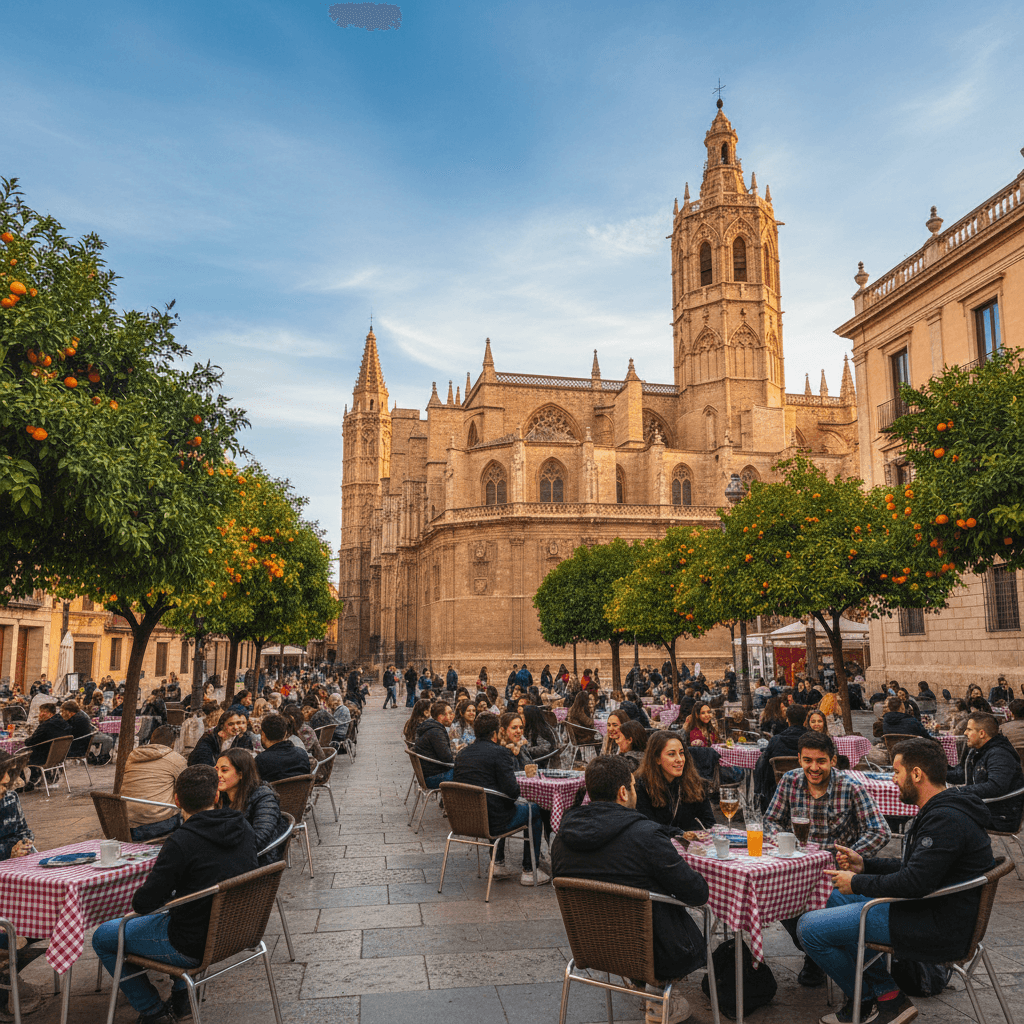
Valencia is Spain's third-largest city, but it does not feel like it. With 800,000 residents in the city proper and 1.8 million in the metro area, it delivers the infrastructure of a major European capital — international airport, high-speed rail, metro system, world-class universities — without the cost or intensity of Madrid or Barcelona.
For international postgraduate students, that combination matters. You get serious academic programs, a manageable cost of living, Mediterranean climate with over 300 days of sunshine, and a city compact enough to navigate by bike in your first week.
This guide covers every dimension of the Valencia student experience: universities, neighborhoods, costs, transport, administrative procedures, and day-to-day life. If you are considering Valencia for your master's, PhD, or post-doc, this is your starting document.
Why Valencia for Postgraduate Studies
Academic Infrastructure
Valencia has four major universities offering postgraduate programs to international students:
Universidad Politecnica de Valencia (UPV)
- Consistently ranked in the top 5 technical universities in Spain
- QS World Ranking: top 400 globally, top 100 in engineering and technology
- Strengths: engineering, architecture, fine arts, design, biotechnology, AI
- Campus: Ciudad Politecnica de la Innovacion (Vera campus), Camino de Vera s/n
- International office with dedicated support for non-EU students
- Growing portfolio of English-taught master's programs
Universitat de Valencia (UV)
- Founded in 1499, one of Spain's oldest and most prestigious universities
- Strong in humanities, social sciences, natural sciences, medicine, economics
- Main campuses: Blasco Ibanez (humanities, education), Tarongers (law, economics), Burjassot-Paterna (sciences)
- Research output among the highest in Spain
- Extensive Erasmus+ network and international partnerships
Universidad Cardenal Herrera CEU (CEU UCH)
- Private university with campuses in Valencia, Castellon, and Elche
- Strong in health sciences (dentistry, veterinary, pharmacy), business, and communication
- Smaller class sizes, more personalized attention
- Higher tuition but includes career services and internship placement
Universidad Europea de Valencia
- Part of the Laureate International Universities network
- Focus on business, health sciences, sports, and technology
- Modern facilities, industry-oriented programs
- Flexible scheduling options for working professionals
Geographic Advantage
Valencia sits on Spain's eastern Mediterranean coast, making it a natural hub:
- 2 hours to Madrid by AVE high-speed train
- 3 hours to Barcelona by AVE
- Valencia Airport (VLC) with direct flights to major European hubs, Latin America (seasonal), and North Africa
- Ferry connections to the Balearic Islands (Mallorca, Ibiza)
- Weekend trips to Alicante (1 hour), Murcia (2 hours), or the Pyrenees (4 hours)
Climate
Mediterranean climate with mild winters (average January: 11C) and warm summers (average August: 26C). Over 300 days of sunshine per year. Rain is infrequent but can be intense during the "gota fria" phenomenon in autumn (September-November). Beach access year-round — the water is swimmable from May through October.
International Community
Valencia has a large and growing international population:
- Over 100,000 foreign residents in the metropolitan area
- Active Erasmus student community at both UPV and UV
- International meetup groups, language exchanges, and cultural associations
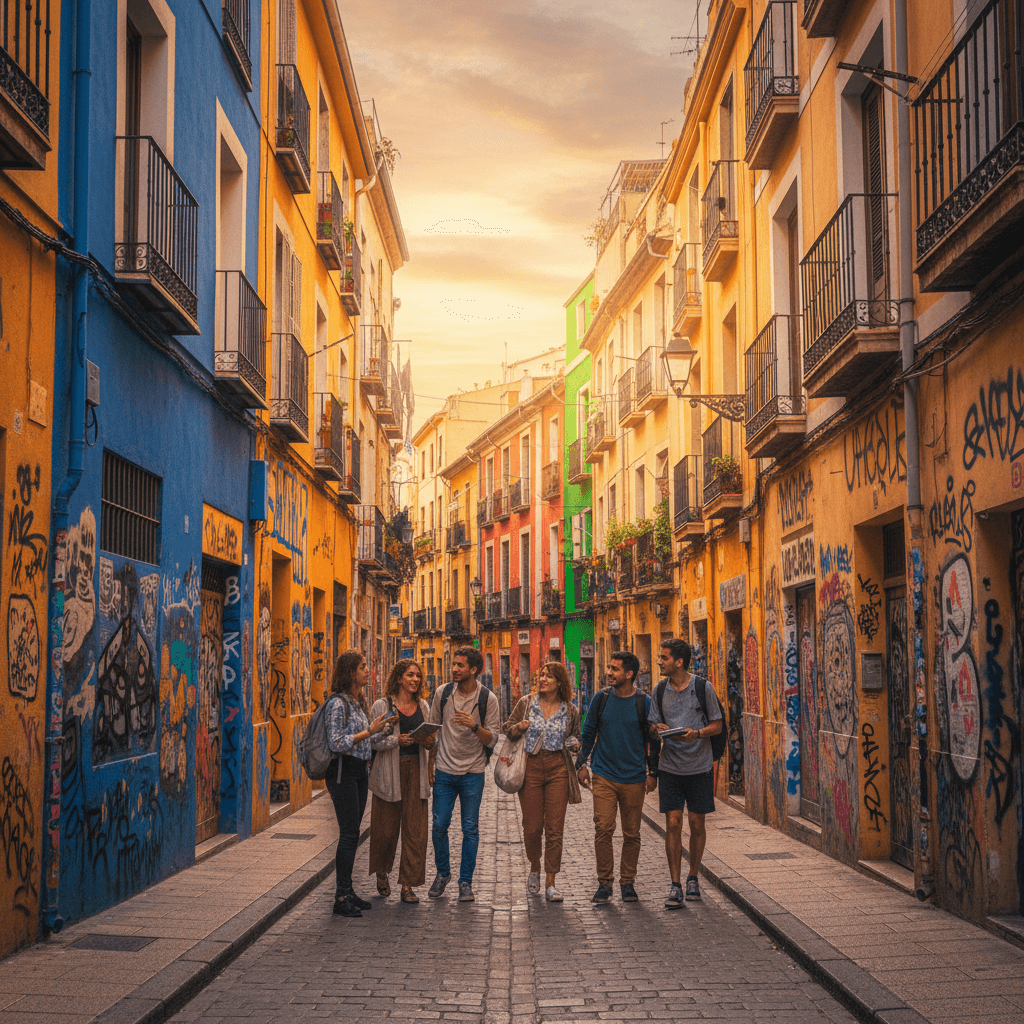
- Neighborhoods like Ruzafa and El Carmen have a cosmopolitan feel
- English is increasingly spoken in central areas, though learning Spanish remains essential
Universities: A Closer Look
UPV — For Engineers, Architects, and Designers
The Universitat Politecnica de Valencia is a technical powerhouse. If your field involves engineering, architecture, computer science, design, agricultural science, or biotechnology, UPV should be on your shortlist.
What makes UPV stand out:
- Research groups: Over 400 active research groups across engineering, ICT, biotech, and food technology. If you want a PhD with real lab access and funded projects, UPV delivers.
- Innovation ecosystem: The Ciudad Politecnica de la Innovacion hosts startups, tech transfer offices, and corporate R&D partners on campus.
- English-taught programs: A growing list includes master's in Data Analytics, Biotechnology, Telecommunication Engineering, Architectural Heritage, and more.
- International integration: The Global Affairs Office on the Vera campus handles visas, housing referrals, and orientation. Dedicated international student coordinator.
- Tuition: Public university rates for master oficial programs — typically 1,500-3,500 EUR per year for EU students, 3,000-7,000 EUR for non-EU students depending on the program.
Campus life: The Vera campus is in the northeast of Valencia, with Benimaclet as the closest residential neighborhood. It has its own sports facilities, libraries, cafeterias, and green spaces. The campus itself is large enough to cycle through.
UV — For Humanities, Sciences, and Social Sciences
The Universitat de Valencia is the city's comprehensive university with a 500-year history. It covers virtually every academic discipline.
What makes UV stand out:
- Breadth: From medieval history to quantum physics, from international law to marine biology. UV offers over 100 master's programs.
- Research: Multiple research institutes including IFIC (Institute of Corpuscular Physics, a CSIC joint center), the Cavanilles Institute of Biodiversity, and the Institute of Materials Science.
- Language programs: The Centre de Llengues offers Spanish, Catalan/Valencian, and other language courses for international students at reduced rates.
- Historical significance: The main historic building (La Nau) in the city center hosts exhibitions, concerts, and cultural events — being a UV student gives you access to a 500-year cultural institution.
- Campuses: Blasco Ibanez is the largest (education, humanities, psychology, physiotherapy), Tarongers handles law, economics, and social sciences. The science campus is in Burjassot-Paterna, connected by metro.
Tuition: Public university rates. Master oficial programs range from 1,500-3,000 EUR per year for EU students, with non-EU surcharges varying by program.
Neighborhoods: Where to Live
Valencia's neighborhoods each have their own character. Your choice depends on your university, budget, and lifestyle preferences. Here is a quick overview — see our detailed neighborhood guide for full breakdowns with maps, rental prices, and local tips.
Ruzafa
The trendy quarter south of the old city. Independent cafes, art galleries, vintage shops, and the best brunch scene in Valencia. Multi-cultural, with significant Latin American and European expat communities.
- Rent: 350-550 EUR/room in a shared flat
- Vibe: Young professionals and creative types. Active nightlife, especially along Calle Sueca and Calle Literato Azorin.
- Commute: 10 minutes by bike or bus to UV Blasco Ibanez, 20 minutes to UPV.
- Best for: Students who want social life outside university and do not mind paying more for it.
Benimaclet
The classic student neighborhood. A former village absorbed by the city, it still has a "pueblo" feel with its own market, plaza, and local bars. The student population is high because UV's Blasco Ibanez campus is right next door.
- Rent: 280-400 EUR/room in a shared flat
- Vibe: Relaxed, alternative, and affordable. Community gardens, street art, local food shops.
- Commute: 5-minute walk to UV Blasco Ibanez. 10 minutes by bike to UPV.
- Best for: Budget-conscious students who want community and proximity to UV.
Blasco Ibanez
The university corridor itself. Named after the famous Valencian novelist, this avenue runs from the UV campus toward the beach. Student residences, fast food, copy shops, and study cafes line the route.
- Rent: 300-450 EUR/room in a shared flat
- Vibe: Purely student-oriented. Convenient but lacks neighborhood character.
- Commute: Walking distance to UV. 15 minutes to the beach. 20 minutes by bus to UPV.
- Best for: Students who prioritize convenience to campus above all else.
El Carmen
The historic heart of Valencia. Narrow medieval streets, centuries-old buildings, plazas, and a concentration of bars, restaurants, and cultural venues.
- Rent: 400-600 EUR/room
- Vibe: Beautiful and atmospheric but can be noisy, especially Thursday through Saturday nights. Tourist-heavy in some streets.
- Commute: Central location, 15-20 minutes to UV campuses by bike or bus.
- Best for: Students who want to live in the cultural center and can handle nightlife noise.
Campanar
A quieter, more residential area northwest of the center, near the Turia gardens and Nuevo Centro mall. Less nightlife, more green spaces.
- Rent: 280-380 EUR/room
- Vibe: Family-oriented, calm, practical. The Nuevo Centro shopping mall is nearby.
- Commute: 25-30 minutes to UPV by metro or bus. 15-20 minutes to the city center by metro.
- Best for: Students who want quiet, affordable housing with good metro connections.
Patraix
An up-and-coming neighborhood southwest of the center. Traditional Valencian character with increasing renovation and new businesses.
- Rent: 260-350 EUR/room
- Vibe: Local, authentic, affordable. Good metro connections (Line 1 and 5 from Patraix station).
- Commute: 20 minutes to UPV by metro, 15 minutes to city center.
- Best for: Students who want affordability and do not mind being slightly outside the student bubble.
Jesus
One of Valencia's most affordable central neighborhoods. Close to the Central Market and the Estacion del Norte.
- Rent: 250-350 EUR/room
- Vibe: Working-class, diverse, genuine. The Central Market is a 10-minute walk.
- Commute: Well-connected by bus and metro to all campuses.
- Best for: Students on a tight budget who want to stay central.
Cost of Living
Valencia is significantly cheaper than Madrid and Barcelona. Here is a realistic monthly budget for a postgraduate student in 2026:
Category | Budget Range (EUR/month)
Rent (room in shared flat) | 280-500
Groceries | 150-200
Transport (monthly pass) | 20-45
Utilities (shared) | 40-70
Mobile phone | 10-20
Eating out / social | 80-150
Health insurance (if required) | 30-60
University supplies | 20-40
Total | 630-1,085
The Bono Joven transport discount (under 30) brings monthly transport costs to approximately 20 EUR. Groceries are affordable if you shop at Mercadona, Consum, or local markets. Valencia's Central Market and Ruzafa Market offer fresh produce at competitive prices.
For a detailed city-by-city comparison, read our Cost of Living: Valencia vs Madrid vs Barcelona guide.
Public Transport
Valencia's public transport system is managed by MetroValencia (metro and tram) and EMT Valencia (buses).
Metro
The metro has 9 lines (L1-L9) covering the city and surrounding municipalities:
- L1 (Betera-Villanueva de Castellon): North-south, connects Benimaclet and outer suburbs
- L3 (Rafelbunyol-Aeroport): Key line — connects the airport to the center via Xativa and Colon stations
- L5 (Marq-Aeroport): East-west, connects the coast area to the airport
- L7 (Torrent Avinguda-Marq): Southwest connections
- Tram lines (L4, L6, L8): Surface trams serving the coast and northern suburbs
Key stations for students: Benimaclet (L1, near UV), Colon (L3/L5, city center), Xativa (L1/L5, near train station), Turia (L1, near UPV area).
Buses (EMT)
EMT Valencia operates over 60 bus routes. Key routes for students:
- Line 41: Connects Blasco Ibanez to the city center
- Line 71: Beach to center via Blasco Ibanez
- Line 29: UPV campus connections
Bono Joven: If you are under 30, the Bono Joven discount card costs approximately 20 EUR per month for unlimited travel on metro and bus. Get it at the MetroValencia office in Colon station with your TIE/NIE and proof of age.
Valenbici
Valencia's public bike-sharing system. Annual subscription: approximately 30 EUR. Over 275 stations across the city. First 30 minutes of each trip free. Perfect for commuting between neighborhoods and campuses.
Getting to the Airport
Valencia Airport (VLC) is 8 km from the city center:
- Metro L3 or L5: 20 minutes to Colon station. 3-5 EUR depending on zone.
- Taxi: Fixed rate of approximately 20-22 EUR to the center.
- Cabify/Free Now: Ride-hailing apps available, typically 15-20 EUR.
Administrative Essentials
When you arrive in Valencia, you have a series of administrative tasks that must be completed in a specific order. Do not underestimate the time these take — some require appointments booked weeks in advance.
Empadronamiento (Census Registration)
What: Official registration at your Valencia address. Required for nearly everything else.
Where: OAC (Oficina de Atencion Ciudadana). Main office at Tabacalera, Calle Amadeo de Saboya 11. Additional offices in each district.
When: Within 3 months of arrival, but do it in your first week.
How: Book a cita previa (appointment) online at valencia.es. Bring your passport, rental contract or landlord declaration (declaracion de acogida), and a completed empadronamiento form.
NIE/TIE (Foreigner's ID)
What: NIE is your foreigner identification number. TIE is the physical card.
Where: Oficina de Extranjeria, Calle Zapadores 1, Valencia. Or the National Police station at Gran Via de Ramiro Ledesma 36.
When: Within 30 days of arrival for EU citizens. Non-EU students with a visa should apply for TIE within 30 days.
How: Book cita previa at sede.administracionespublicas.gob.es. Bring passport, visa, empadronamiento certificate, EX-17 form (EU) or EX-17 (non-EU), photos, proof of enrollment, and health insurance.
Social Security Number
What: Required if you plan to work (part-time jobs, internships, research contracts).
Where: Tesoreria General de la Seguridad Social, Calle Bailén 46.
How: Bring passport, NIE/TIE, and completed TA.1 form.
Bank Account
What: Essential for receiving scholarship payments, paying rent, and daily expenses.
Where: Major banks include CaixaBank, BBVA, Santander, Bankinter. Online-first banks like N26, Revolut, and Wise are popular with international students.
What you need: Passport, NIE or empadronamiento certificate (requirements vary by bank).
For a detailed walkthrough of each process with addresses and appointment links, see our Valencia Admin Offices Guide.
Healthcare
Public Health System
If you have a student visa and are registered in the Social Security system, you may have access to the public healthcare system (Sistema Nacional de Salud). However, coverage varies:
- EU/EEA students with a European Health Insurance Card (EHIC) have reciprocal coverage.
- Non-EU students need private health insurance for their visa application. Some can later access public healthcare after registering for Social Security, but this is not guaranteed.
Private Health Insurance
Most international students opt for private health insurance. Common providers:
- Sanitas: Plans from 40-80 EUR/month for students
- Adeslas: Similar range, good hospital network in Valencia
- ASISA: Budget-friendly option, from 30-50 EUR/month
- Caser Seguros: Often recommended by universities
The visa application requires health insurance with no co-payments and full coverage, including repatriation. Verify your policy meets consulate requirements before departing.
Nearest Hospitals
- Hospital Clinico Universitario: Avenida Blasco Ibanez 17 (next to UV campus)
- Hospital La Fe: Avenida Fernando Abril Martorell 106 (major public hospital, south Valencia)
- Hospital General Universitario: Avenida Tres Cruces 2
Student Life and Culture
Language
The Comunitat Valenciana has two official languages: Castellano (Spanish) and Valenciano (the local variant of Catalan). At universities, most postgraduate programs are taught in Spanish, with increasing English-taught options. Valenciano appears on street signs, official documents, and some undergraduate courses.
As an international student, learning Spanish is essential. Most social life operates in Spanish. Learning basic Valenciano phrases earns goodwill with locals but is not necessary for daily life.
Food
Valencia is the birthplace of paella and takes rice seriously. The city has a rich food culture:
- Mercado Central: One of Europe's largest covered markets. Fresh produce, meat, fish, spices.
- Menu del dia: Midday set menus at restaurants, typically 10-14 EUR for three courses plus drink. The best value for eating out.
- Horchata and fartons: The iconic Valencian snack. Best at Horchateria Santa Catalina or Horchateria Daniel.
- Student bars: Benimaclet and Blasco Ibanez have affordable tapas bars where a beer and tapa costs 3-5 EUR.
Weather and Outdoor Life
Valencia's climate means outdoor life is the default. The Turia Park (Jardines del Turia), a 9-km green corridor built in the drained riverbed, is the city's spine for running, cycling, and socializing. The beach (Malvarrosa and Patacona) is accessible by bike in 15-20 minutes from the center. Weekend trips to the Albufera natural park (rice paddies, boat rides, sunset) take 30 minutes by bus.
Fiestas
- Las Fallas (March 15-19): Valencia's signature festival. Massive papier-mache sculptures, fireworks (mascletas at 2pm daily in Plaza del Ayuntamiento), firecrackers, and the Nit del Foc. The city population doubles during Fallas. Book accommodation well in advance if arriving in March.
- Semana Santa: Easter processions, particularly atmospheric in the old city.
- La Tomatina: In nearby Bunol (30 minutes by train), the last Wednesday of August.
- October 9 (Dia de la Comunitat Valenciana): Regional holiday with a mocadora tradition.
Nightlife
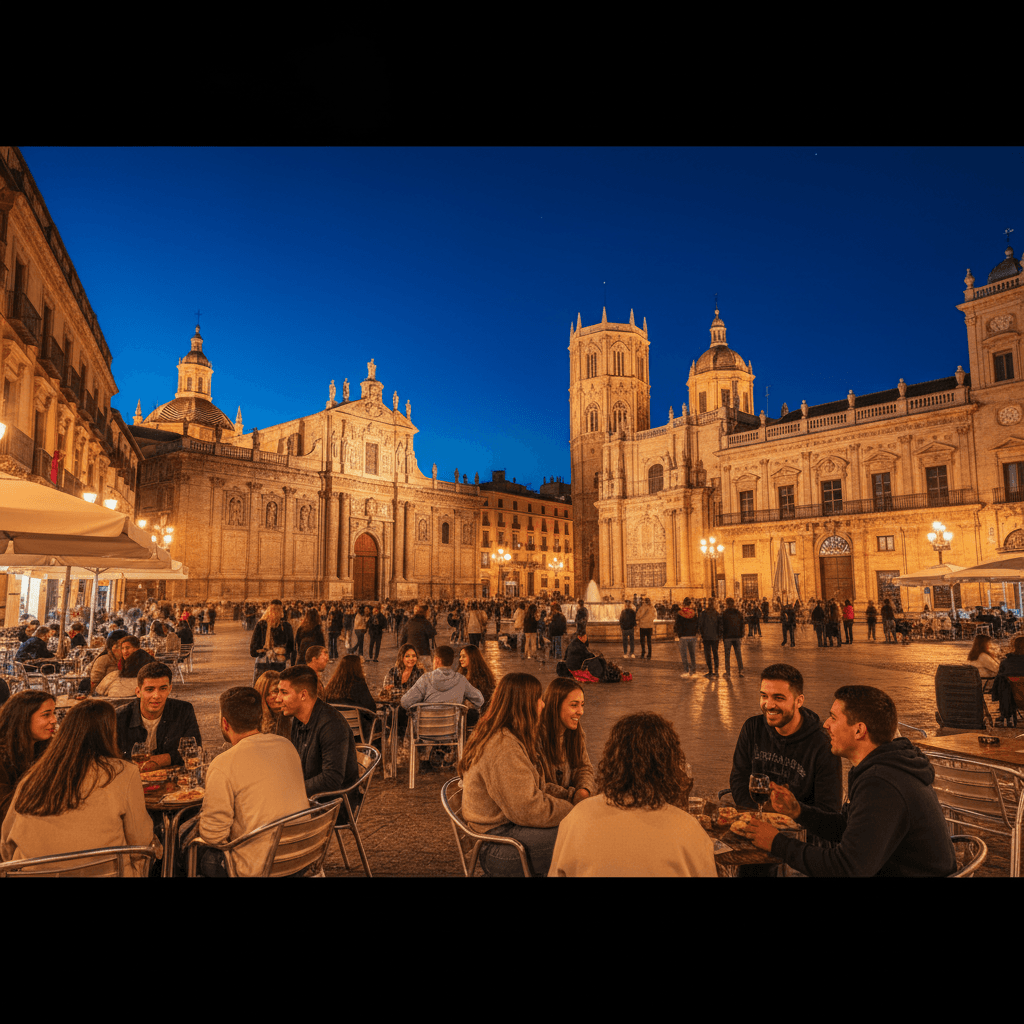
Valencia has a vibrant nightlife scene:
- El Carmen: Bars and small clubs in the old quarter. Thursday and Friday nights are busiest.
- Ruzafa: Cocktail bars and live music venues. More alternative and international crowd.
- Marina Beach area: Larger clubs (Marina Beach Club, Mya) open in summer.
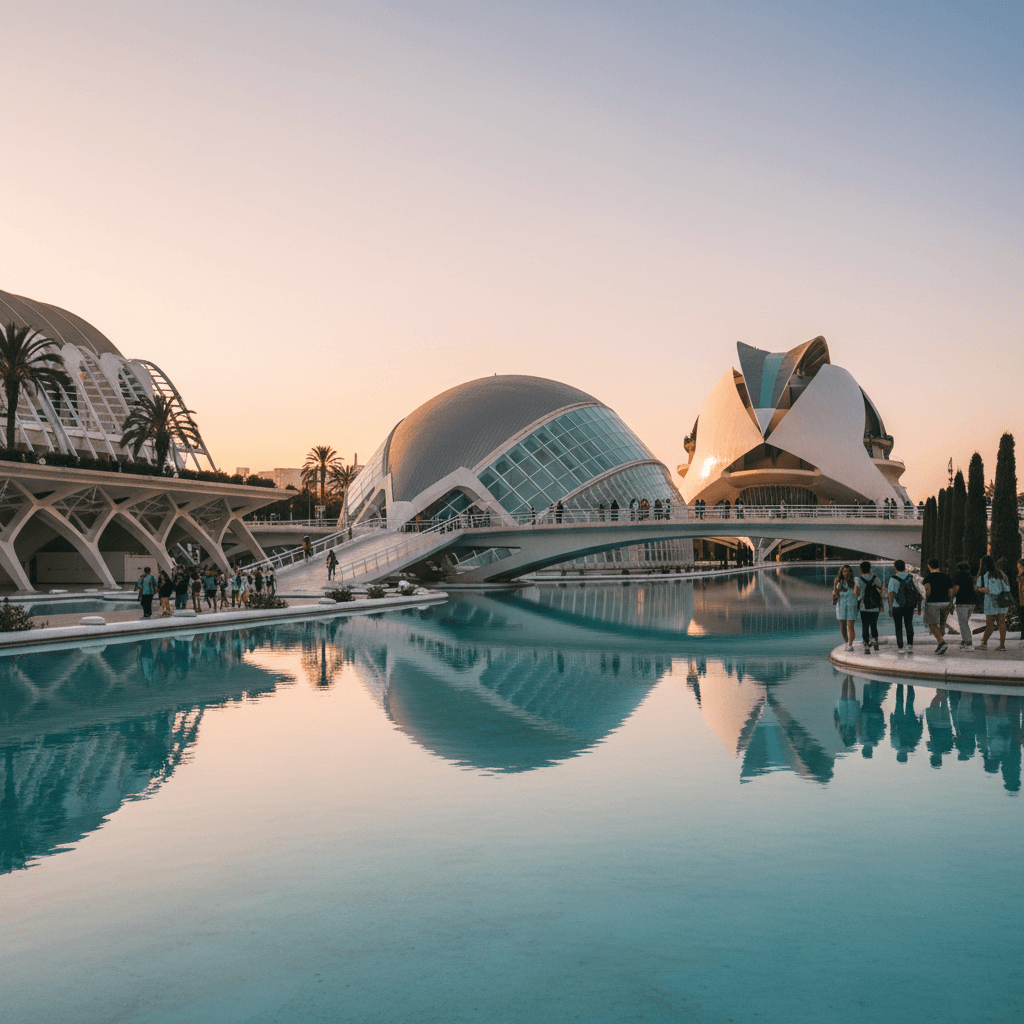
- Ciudad de las Artes y las Ciencias area: L'Umbracle terrace, upscale open-air nightlife.
Spanish nightlife starts late. Dinner at 9-10pm, bars at midnight, clubs after 2am.
Practical Tips for International Students
- Open a Spanish bank account early. Many landlords and service providers only accept Spanish bank transfers. N26 or Revolut can serve as a temporary bridge.
- Get your empadronamiento first. It unlocks almost every other administrative process.
- Download these apps: Valenbici (bike sharing), EMT Valencia (real-time bus tracking), Google Maps (metro integration), Wallapop (second-hand goods), Idealista/Fotocasa (apartment hunting).
- Join your university's international student association. Both UPV and UV have ESN (Erasmus Student Network) chapters that organize trips, events, and social activities.
- Learn basic Spanish before arriving. Even A2 level makes a dramatic difference in your administrative tasks, social life, and apartment search.
- Budget for a security deposit. Most shared flats require 1-2 months' rent as deposit plus the first month upfront. Budget 600-1,000 EUR for move-in costs.
- Bring your documents apostilled. Degree certificates and transcripts should be apostilled (Hague Apostille) or legalized before leaving your home country. Getting this done in Spain is much harder.
- Register with your consulate/embassy. Most countries recommend registering as a citizen abroad, especially for emergencies.
- Get a Spanish SIM card. Prepaid options from Vodafone, Orange, and MasMovil start at 10 EUR/month with data. Alternatively, Lycamobile offers cheap international calls to most countries.
- Use WhatsApp for everything. Spain runs on WhatsApp. Landlords, university groups, social plans, and even some administrative communications happen through WhatsApp.
Climate Comparison: Valencia vs Other Spanish Cities
Factor | Valencia | Madrid | Barcelona
Average temp (annual) | 18.4C | 14.5C | 16.5C
Sunshine (hours/year) | 2,660 | 2,769 | 2,524
Rain (days/year) | 45 | 63 | 78
Beach access | Yes (15 min from center) | No | Yes (metro access)
Winter low (avg Jan) | 7C | 2C | 5C
Summer high (avg Aug) | 30C | 33C | 29C
Valencia's combination of mild winters, abundant sun, and beach access creates a lifestyle that is difficult to match in other Spanish cities at the same price point.
Next Steps
Valencia rewards students who plan ahead. The biggest challenge is not academic — it is getting your paperwork done efficiently in the first 30 days. With the right preparation, you avoid the queues, the wasted appointments, and the stress that derails so many international students in their first weeks.
Start with these resources:
- Best Neighborhoods in Valencia for Students — find your area
- Your First 7 Days in Valencia — day-by-day arrival plan
- Cost of Living: Valencia vs Madrid vs Barcelona — budget realistically
Postgrado Espana helps international students navigate every step of the postgraduate journey in Spain. From program selection to your first 90 days in Valencia, we provide expert guidance in your language. Talk to us on WhatsApp — no commitment, just clarity.