Postgrad Spain
Madrid vs Barcelona vs Valencia: Cost Comparison for International Students
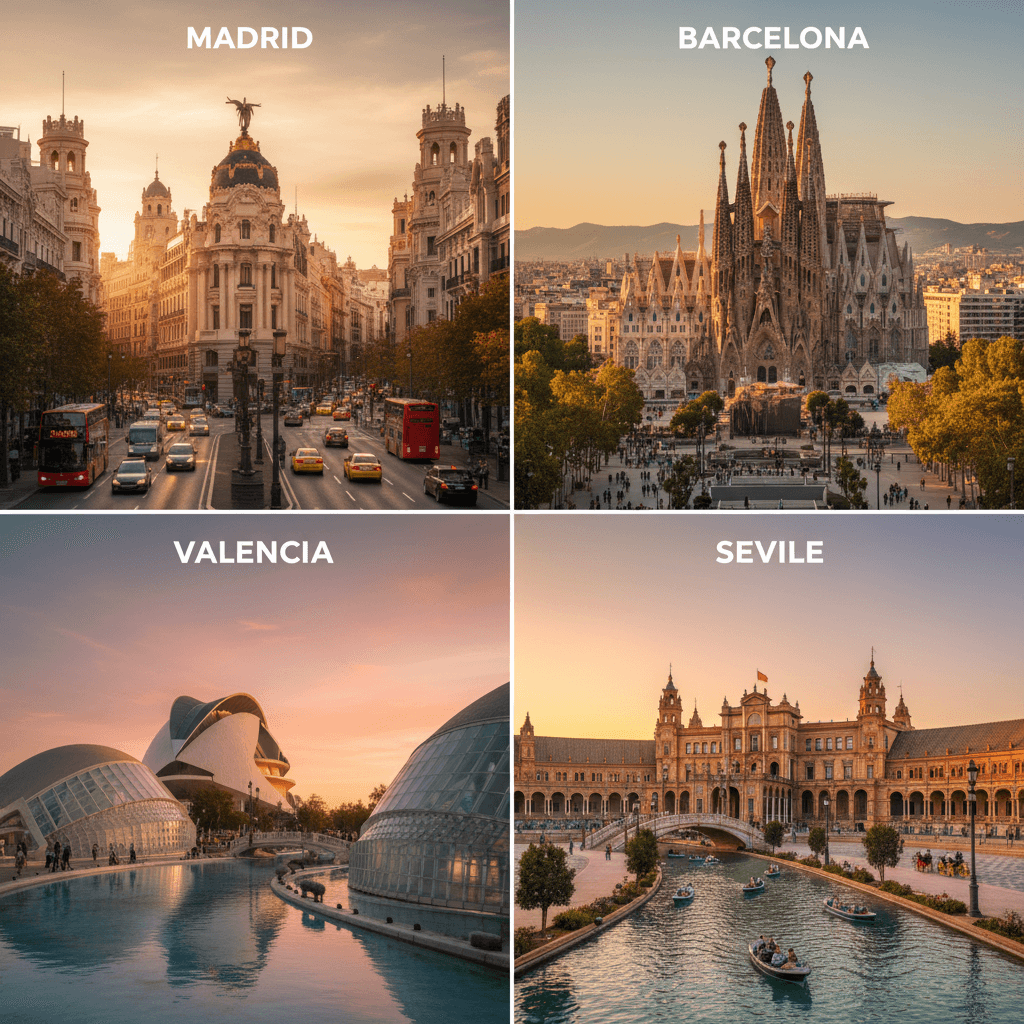
Choosing between Madrid, Barcelona, and Valencia is one of the biggest decisions you will make as an international student in Spain. Each city offers a different lifestyle, job market, and price tag. The difference between choosing the right city and the wrong one can mean EUR 300-500 per month — which over a one-year master's program adds up to EUR 3,600-6,000.
This guide compares all three cities across the categories that matter most to students: housing, groceries, transport, nightlife, the job market, weather, and the international community. Every figure is based on 2025-2026 data, and every comparison uses the same methodology so you can make an apples-to-apples decision.
If you have already decided on a city and want to build a detailed budget, see our monthly budget templates for students in Spain.
Housing: The Biggest Cost Difference
Housing is where the three cities diverge most dramatically. A shared-flat room in Valencia can cost half of what the same room costs in Barcelona's Eixample district.
Housing Type | Madrid | Barcelona | Valencia
Room in shared flat (center) | EUR 450-650 | EUR 500-700 | EUR 300-450
Room in shared flat (outskirts) | EUR 350-500 | EUR 400-550 | EUR 250-350
Studio apartment (center) | EUR 800-1,100 | EUR 900-1,200 | EUR 550-750
Studio apartment (outskirts) | EUR 600-850 | EUR 700-950 | EUR 400-600
University residence | EUR 700-1,200 | EUR 750-1,300 | EUR 500-800
Key observations:
- Barcelona is the most expensive for housing across all categories. Tourist demand from Airbnb has pushed residential rents up significantly, and new regulations have not yet brought prices down.
- Madrid is slightly cheaper than Barcelona but still expensive. The metro network is extensive, so living farther from the center is more practical than in Barcelona.
- Valencia is the clear winner. Rooms in neighborhoods like Benimaclet, Campanar, or Ruzafa are EUR 200-300 cheaper than equivalent neighborhoods in Madrid or Barcelona.
Deposit requirements are the same across all three cities: typically one to two months' rent upfront plus one month as a deposit. In Barcelona, some landlords also require a bank guarantee or additional deposit, pushing move-in costs higher.
Groceries and Food
Daily food costs are more similar across the three cities than housing, but meaningful differences still exist.
Item | Madrid | Barcelona | Valencia
Monthly groceries (cooking at home) | EUR 180-250 | EUR 200-270 | EUR 160-220
Menu del dia (lunch) | EUR 12-15 | EUR 12-16 | EUR 10-13
Coffee (cafe con leche) | EUR 1.50-2.00 | EUR 1.60-2.20 | EUR 1.30-1.80
Beer (cana, bar) | EUR 2.50-3.50 | EUR 2.80-4.00 | EUR 2.00-3.00
Supermarket comparison | Mercadona, Lidl, Carrefour | Mercadona, Bonpreu, Lidl | Mercadona, Consum, Lidl
Key observations:
- Valencia wins on food costs. The city is the heart of Spain's agricultural region (the huerta), so fresh produce is cheaper and more abundant. The Mercado Central and local markets offer excellent deals.
- Barcelona is the most expensive for eating out. Tourist-area restaurants inflate averages, but even local neighborhood bars charge EUR 1-2 more per item compared to Valencia.
- Madrid sits in the middle. The menu del dia culture is strong, and neighborhoods like Lavapies and Tetuan offer very affordable international food options.
All three cities have Mercadona, and shopping the store-brand Hacendado line will save you 30-40% compared to name brands regardless of city.
Transport
Transport | Madrid | Barcelona | Valencia
Monthly student pass | EUR 20 (Abono Joven) | EUR 40 (T-Jove trimestral, ~EUR 13/month) | EUR 0-10 (with Carnet Joven)
Metro coverage | 302 stations, 13 lines | 196 stations, 12 lines | 62 stations, 2 lines (expanding)
Bike-friendliness | Moderate | Good | Excellent
Average commute time | 35-45 min | 30-40 min | 20-30 min
Key observations:
- Madrid's Abono Joven (under 26) at EUR 20/month is one of the best deals in Europe. It covers all metro, bus, and commuter rail in the entire Madrid region. If you are under 26, transport in Madrid is essentially solved.
- Barcelona's T-Jove is affordable at roughly EUR 13/month (sold as a trimestral pass), though the system covers a smaller area than Madrid's.
- Valencia is a compact city. Many students cycle everywhere using the extensive bike lane network. The metro is smaller but covers the university areas. If you live near your campus, you may spend almost nothing on transport.
Winner: Valencia for overall transport costs, Madrid for public transit value (if under 26).
Planning your move to Spain? Our advisors can build you a personalized relocation plan — including city-specific housing leads and budget projections — in 48 hours. Get your relocation plan.
Nightlife and Social Life
Category | Madrid | Barcelona | Valencia
Average night out (drinks + entry) | EUR 20-35 | EUR 25-40 | EUR 15-25
Club entry | EUR 10-20 | EUR 15-25 | EUR 5-15
Student-friendly areas | Malasana, La Latina, Moncloa | Raval, Gracia, Poble Sec | Ruzafa, Carmen, Blasco Ibanez
Nightlife hours | Until 6:00 AM | Until 5:00 AM | Until 4:00 AM
Cultural events (museums, galleries) | Abundant, many free | Abundant, many free | Growing, most free
Key observations:
- Madrid has Spain's most vibrant nightlife scene. Late-night culture is embedded in the city's DNA — dinner at 10 PM, going out at midnight, returning at sunrise. Student areas like Moncloa and Malasana offer affordable drinks. Many museums (Prado, Reina Sofia) offer free evening hours.
- Barcelona nightlife is more expensive. Entry fees and drink prices are higher, partly driven by the tourist economy. That said, the beach, park culture, and street life provide plenty of free social options.
- Valencia is the most affordable for nightlife. The Fallas festival alone is worth the experience. Ruzafa has a thriving bar scene with student-friendly prices. The beach is free and central.
Job Market and Part-Time Work
Factor | Madrid | Barcelona | Valencia
Student job availability | High | High | Moderate
Average part-time hourly wage | EUR 8-12 | EUR 8-12 | EUR 7-10
English-teaching demand | Very high | High | Moderate
Tech/startup ecosystem | Strong | Very strong | Growing fast
Internship opportunities | Abundant | Abundant | Growing
Language needed | Spanish essential | Spanish/Catalan helpful | Spanish essential
Key observations:
- Barcelona has the strongest international job market. Many multinational companies and startups operate in English, and the city is a European tech hub. Knowing Catalan is an advantage but not required for most student jobs.
- Madrid is the financial and administrative capital. There are more corporate internship opportunities, and English-teaching demand is the highest in Spain.
- Valencia has a smaller job market but is growing rapidly, particularly in tech and digital nomad-friendly companies. Part-time wages are slightly lower, but the cost of living is so much lower that your purchasing power may actually be better.
For a detailed breakdown of student work regulations and income expectations, see our guide to part-time work income in Spain.
Weather and Quality of Life
Factor | Madrid | Barcelona | Valencia
Average winter temp (Jan) | 6°C | 10°C | 11°C
Average summer temp (Aug) | 33°C | 28°C | 30°C
Rainy days/year | ~65 | ~80 | ~50
Beach access | No (2.5 hrs by train) | Yes (city beach) | Yes (city beach)
Green spaces | Retiro, Casa de Campo | Montjuic, Park Guell | Turia Gardens, Albufera
Air quality | Moderate | Good | Good
Key observations:
- Valencia has the best overall climate. Mild winters, warm summers without Madrid's extreme heat, the fewest rainy days, and direct beach access. The Turia Gardens — a 9 km park built in a former riverbed — is one of the best urban green spaces in Europe.
- Barcelona offers a Mediterranean climate with beach access, but it is more humid and gets more rain than Valencia.
- Madrid has extreme continental weather: very hot summers and cold, dry winters. No beach access, but the Retiro Park and Sierra de Guadarrama mountains (45 minutes by train) compensate.
International Community
Factor | Madrid | Barcelona | Valencia
International student population | Very large | Very large | Large and growing
Erasmus community | Massive | Massive | Large
English-speaking ease | Moderate | Moderate-high | Moderate
Expat infrastructure | Extensive | Extensive | Growing fast
Facebook/WhatsApp groups | Hundreds | Hundreds | Dozens (active)
Key observations:
- Barcelona attracts the most international profile. The combination of beach, architecture, and European tech scene draws students from everywhere. You will find it easier to navigate in English here than in the other two cities.
- Madrid has a larger absolute population of international students, but the city is bigger, so the community can feel more dispersed. Latin American students are particularly well represented.
- Valencia has a rapidly growing international community. The city has actively marketed itself to remote workers and students over the past five years. The community is smaller but tight-knit, and it is easier to build close friendships.
Not sure which city is right for you? Tell us your program, budget, and priorities, and our team will recommend the best city match — with a full relocation plan — in 48 hours. Start your personalized city assessment.
Total Monthly Cost Summary
Here is the bottom line — the total monthly cost for a typical international student in each city, living in a shared flat, cooking most meals at home, and going out twice a week.
Expense | Madrid | Barcelona | Valencia
Rent (shared flat, center) | EUR 550 | EUR 600 | EUR 375
Groceries | EUR 210 | EUR 230 | EUR 185
Transport | EUR 20 | EUR 13 | EUR 10
Nightlife/social | EUR 100 | EUR 120 | EUR 70
Phone + internet | EUR 15 | EUR 15 | EUR 15
Misc (health, toiletries) | EUR 50 | EUR 50 | EUR 45
Total | EUR 945 | EUR 1,028 | EUR 700
Valencia is approximately EUR 245/month cheaper than Madrid and EUR 328/month cheaper than Barcelona. Over a 10-month academic year, that is EUR 2,450-3,280 in savings.
Which City Wins in Which Category?
Category | Winner | Runner-Up
Cheapest housing | Valencia | Madrid
Cheapest food | Valencia | Madrid
Best public transport | Madrid | Barcelona
Best nightlife | Madrid | Barcelona
Best job market | Barcelona | Madrid
Best weather | Valencia | Barcelona
Largest international community | Barcelona | Madrid
Best overall value | Valencia | Madrid
The Verdict
- Choose Madrid if you want the biggest city experience, the best nightlife, and access to corporate internships and English-teaching jobs. Be prepared to pay more for housing.
- Choose Barcelona if you want a Mediterranean lifestyle with a strong international job market, beach access, and a cosmopolitan feel. Be prepared for the highest costs.
- Choose Valencia if you want the best value for money, an excellent quality of life, beach access, and a growing international community. Accept that the job market is smaller (but improving fast).
There is no wrong answer — all three cities are excellent for international students. The right choice depends on your budget, career goals, and lifestyle preferences.
For a broader comparison that includes other European countries, see our Spain vs Portugal vs Italy cost comparison.
Ready to make your move? Our advisors help hundreds of international students choose the right city and program every year. Get a personalized relocation plan — including housing options, budget projections, and enrollment guidance — in 48 hours. Contact us on WhatsApp.