Postgrad Spain
Monthly Budget Templates for Student Life in Spain (EUR 800/EUR 1,100/EUR 1,500)
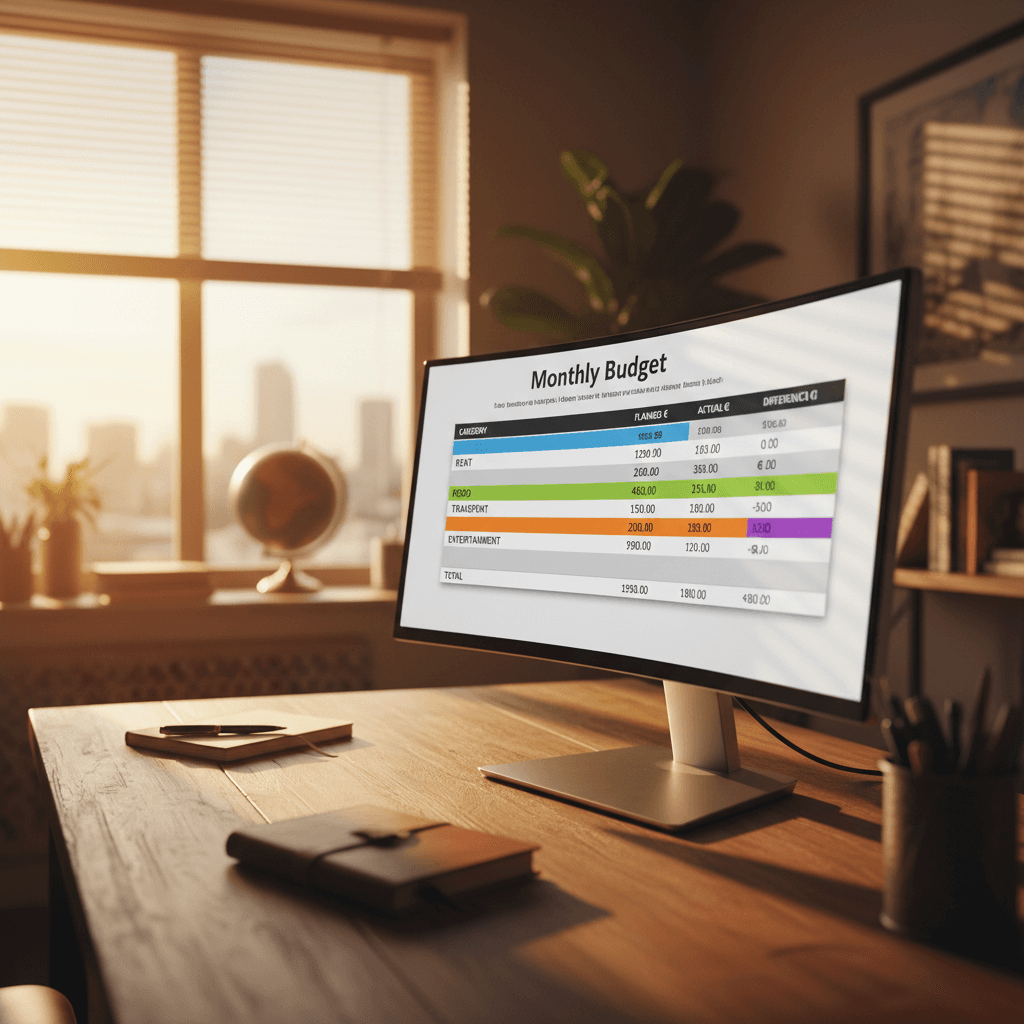
One of the most common questions international students ask is: "How much do I actually need per month?" The answer depends on your city, housing choice, and lifestyle — but vague answers are not helpful when you are trying to set up a bank transfer or convince a consulate that you have sufficient funds.
This guide provides three concrete monthly budget templates at EUR 800, EUR 1,100, and EUR 1,500. Each one is designed for a real student lifestyle, not a theoretical minimum. Every line item is based on 2025-2026 pricing in mid-tier Spanish cities, with adjustments noted for Madrid and Barcelona.
Copy the template that fits your situation, adjust the numbers for your specific city, and you have a working spending plan from day one.
Before You Choose a Budget Tier
Your monthly budget is driven by three decisions:
- City: Valencia, Seville, and Granada are 20-40% cheaper than Madrid and Barcelona. The same quality of life costs significantly less.
- Housing type: A room in a shared flat versus a private studio is the single biggest cost difference — typically EUR 200-400/month.
- Eating habits: Cooking at home versus eating out daily can swing your food budget by EUR 100-200/month.
If you are still deciding on a city, see our city-by-city cost comparison for detailed side-by-side data.
Template 1: Tight Budget — EUR 800/Month
Who this is for: Students prioritizing savings, those with limited funds, or anyone who values financial discipline. Works best in Valencia, Seville, Granada, or smaller university towns. Very tight in Madrid; not realistic in Barcelona without significant compromises.
Category | Amount | Notes
Rent | EUR 300 | Room in shared flat; Benimaclet (Valencia), Macarena (Seville), or Albaicin (Granada)
Groceries | EUR 150 | Weekly shop at Mercadona/Lidl (EUR 35-38/week); cook 80% of meals
Eating out | EUR 50 | Menu del dia x3 (EUR 33) + tapas once (EUR 12-15)
Transport | EUR 15 | Valenbisi/walking + occasional bus. EUR 20 if Madrid Abono Joven
Utilities | EUR 65 | Shared electricity, water, internet. Lower in summer (no heating)
Health insurance | EUR 40 | Basic Spanish private plan (Asisa ADAPT or similar)
Phone | EUR 10 | Digi or Simyo prepaid SIM
Entertainment | EUR 30 | Free events, student nights, parks, beach
University materials | EUR 15 | Library access covers most; occasional printing
Personal care | EUR 15 | Basics from Mercadona/Primark
Buffer | EUR 110 | Unexpected costs, small travel, replacement items
Total | EUR 800 |
Making EUR 800 Work: Practical Tips
- Menu del dia is your secret weapon: At EUR 10-13, a three-course lunch including a drink is often cheaper than cooking the equivalent at home. Use it strategically 2-4 times per week.
- Cycle everywhere: Valenbisi in Valencia costs EUR 30/year. In flat cities, a secondhand bike costs EUR 50-80 and pays for itself in one month.
- Use the university cafeteria: Full meals for EUR 4-7. Cheaper and more nutritious than fast food.
- Entertainment is free: Spain has abundant free cultural events, public parks, beaches, and student-organized activities. Your university's student association runs events weekly.
- WhatsApp groups save money: Departing students sell furniture, books, and household items at steep discounts.
Madrid/Barcelona Adjustment
To make this budget work in Madrid, increase rent to EUR 450-550 and reduce buffer and entertainment. Total becomes approximately EUR 950-1,050. In Barcelona, expect EUR 1,000-1,100 minimum.
Template 2: Comfortable Budget — EUR 1,100/Month
Who this is for: Most international postgraduate students. Allows regular social activities, eating out without stress, and a comfortable living standard. Works well in every Spanish city.
Category | Amount | Notes
Rent | EUR 420 | Room in shared flat; good neighborhood. Ruzafa (Valencia), Arganzuela (Madrid)
Groceries | EUR 180 | Weekly shop (EUR 45/week); mix of Mercadona and fresh market
Eating out | EUR 100 | Menu del dia x5 (EUR 55) + tapas x3 (EUR 35) + coffee out (EUR 10)
Transport | EUR 40 | Monthly transit pass. EUR 20 if Madrid Abono Joven (under 26)
Utilities | EUR 80 | Shared electricity, water, high-speed internet
Health insurance | EUR 45 | Mid-range Spanish plan
Phone | EUR 15 | Contract plan with data (Simyo, Pepephone)
Entertainment | EUR 80 | Cinema, concerts, weekend activities, gym or sport
University materials | EUR 20 | Printing, occasional book purchase
Personal care | EUR 20 | Haircut every 6 weeks, personal items
Buffer/savings | EUR 100 | Weekend trips, clothing, unexpected expenses
Total | EUR 1,100 |
What EUR 1,100 Gets You
This is the sweet spot. At this level, you can:
- Eat out for lunch most weekdays
- Go out with friends on weekends without counting every euro
- Maintain a gym membership or join a sports club
- Take a weekend trip once a month (BlaBlaCar + hostel: EUR 40-80)
- Save a small buffer for emergencies
Madrid/Barcelona Adjustment
In Madrid, increase rent to EUR 550-650. Total becomes approximately EUR 1,250-1,350. In Barcelona, expect EUR 1,300-1,400 for the same quality of life.
Template 3: Generous Budget — EUR 1,500/Month
Who this is for: Students who want their own studio apartment, regular dining out, weekend travel, and no financial friction in daily decisions. Comfortable in any Spanish city.
Category | Amount | Notes
Rent | EUR 700 | Studio apartment; central neighborhood
Groceries | EUR 200 | Premium ingredients, organic options, specialty items
Eating out | EUR 150 | Menu del dia x5, restaurants x2, tapas x3, brunch x1
Transport | EUR 40 | Monthly transit pass + occasional taxi (EUR 10-15)
Utilities | EUR 100 | Private apartment: electricity, water, internet, heating
Health insurance | EUR 50 | Comprehensive plan with dental
Phone | EUR 20 | Contract with generous data
Gym/fitness | EUR 35 | Mid-range gym or ClassPass equivalent
Entertainment | EUR 100 | Cultural events, nightlife, hobbies, streaming subscriptions
University materials | EUR 20 |
Personal care | EUR 25 | Grooming, personal items
Travel/savings | EUR 60 | Weekend trips, building emergency fund
Total | EUR 1,500 |
What EUR 1,500 Gets You
At this level, finances are not a daily concern. You can:
- Live alone in a studio (privacy, independence, your own schedule)
- Eat out frequently without guilt
- Travel within Spain every few weekends (Avlo trains from EUR 7)
- Maintain fitness routines
- Host friends at your apartment
- Build savings for post-graduation plans
Madrid/Barcelona Adjustment
In Madrid, a studio in a decent area costs EUR 800-1,000. Total becomes approximately EUR 1,650-1,800. In Barcelona, expect EUR 1,750-1,900 for a comparable studio.
Category-by-Category Optimization
Groceries: Where the Smart Money Goes
Strategy | Weekly Savings | Annual Savings
Shop at Mercadona instead of Carrefour | EUR 5-8 | EUR 260-416
Buy Hacendado (store brand) over name brands | EUR 3-5 | EUR 156-260
Weekly market visit for fresh produce | EUR 3-6 | EUR 156-312
Batch cooking on Sundays | EUR 8-12 | EUR 416-624
Total potential savings | EUR 19-31 | EUR 988-1,612
Transport: Stop Overspending
Option | Monthly Cost | Best For
Walking only | EUR 0 | If you live near campus
Valenbisi (Valencia) | EUR 2.50 | Valencia residents
Madrid Abono Joven (under 26) | EUR 20 | Madrid — unbeatable value
Standard monthly pass | EUR 40-55 | Any city, all zones
Secondhand bike purchase | EUR 4-7 (amortized) | Flat cities, year-round
Entertainment: Fun Does Not Require Spending
Spain offers more free entertainment than most European countries:
- Free museum days: Most museums have free entry one day per week or month
- University events: Lectures, film screenings, language exchanges — all free
- Outdoor activities: Beaches, hiking (Sierra Nevada, Montserrat, Serra Calderona), city parks
- Tapas culture: In Granada, tapas are free with every drink — a beer (EUR 2-3) comes with a tapa
- Fiestas: Spain has more public holidays and local festivals than almost any country in Europe
Tracking Your Spending
A budget only works if you track it. These tools work well for students in Spain:
- Fintonic: Spanish app that connects to your bank account and categorizes spending automatically. Free.
- Splitwise: Essential for shared flat expenses — rent, utilities, groceries. Everyone knows who owes what.
- Revolut or Wise card: Track spending by category, set monthly limits, and convert currency at interbank rates.
- Simple spreadsheet: A Google Sheets template with your categories and weekly inputs. Update it every Sunday.
The most important habit: review your spending every week. Ten minutes on Sunday prevents month-end surprises.
How These Budgets Compare to Visa Requirements
Most Spanish student visa applications require proof of financial means. The standard requirement is approximately EUR 600/month (or the equivalent annual amount in your bank account).
- EUR 800 budget: Comfortably above the visa threshold
- EUR 1,100 budget: Well above, no issues
- EUR 1,500 budget: Significantly exceeds requirements
For the visa application, you typically need to show the full study period amount (e.g., 10 months x EUR 600 = EUR 6,000) in a bank account or through a scholarship letter. Your actual spending can differ from the visa requirement — the templates above reflect real costs, not bureaucratic minimums.
For details on the visa financial requirements, see our student visa guide.
Conclusion
The right monthly budget for student life in Spain depends on your city and priorities, but these three templates give you a concrete starting point:
- EUR 800/month: Disciplined but achievable in mid-tier cities
- EUR 1,100/month: The sweet spot for most students
- EUR 1,500/month: Comfortable independence with room for travel
Pick the template closest to your situation, adjust rent for your target city, and you have a working financial plan. The most important step is knowing your numbers before you arrive — not figuring them out after your first month when half the money is already gone.
We help students build personalized budgets that account for their specific city, housing situation, and financial constraints. No generic advice — real numbers for your real situation.