Postgrad Spain
Valencia Food Guide for Students on a Budget
Valencia is one of the best cities in Spain for eating well on a student budget. The combination of fresh Mediterranean produce, a strong menu del dia culture, affordable supermarkets, and one of Europe's great food markets means you can eat excellent food without spending much.
This guide breaks down everything: grocery shopping strategies, the cheapest places to eat out, how to navigate the menu del dia system, and what to cook at home when your budget is at its tightest.
The Menu del Dia: Your Best Friend
The menu del dia is Spain's greatest contribution to affordable eating. For a fixed price, you get a first course, a second course, dessert or coffee, bread, and a drink (usually water, beer, or wine). At lunchtime — between 13:00 and 16:00 — nearly every neighborhood restaurant in Valencia offers one.
What to Expect
- Price range: EUR 8-15 in most student-friendly areas. Some places go as low as EUR 6-7 in neighborhoods like Benimaclet, Patraix, or Algiros.
- Typical first courses: Salad, soup, pasta, lentil stew, gazpacho (summer), vegetable cream
- Typical second courses: Grilled chicken, pork loin, fish of the day, paella (often on Thursdays), meatballs
- Included: Bread, water or soft drink (sometimes beer or wine), dessert or coffee
- Portions: Generous. You will not be hungry afterward.
Best Budget Menu del Dia Spots
- Benimaclet area: Restaurants around Plaza de Benimaclet and along Calle Dolores Marques offer menus from EUR 8-10. Try Bar Picadero or El Rincon de Ilda.
- Algiros (near UV campus): Calle Ernesto Ferrer and surrounding streets have several options at EUR 8-9.
- Near UPV campus: Along Avenida de los Naranjos and Camino de Vera, several restaurants cater to students with menus at EUR 8-11.
- El Carmen: Slightly more expensive (EUR 10-13) but more variety. Casa Montania on Calle Jose Benlliure offers a solid traditional menu.
- Russafa: EUR 10-14 range, with more creative options. Check Canalla Bistro's lunch menu or the daily offerings at smaller tapas bars on Calle Sueca.
Menu del Dia Tips
- Go at 13:30 for the widest selection — kitchens prepare limited quantities of each dish
- Ask for the menu if it is not posted outside — many places have it available but do not advertise
- Thursday paella: many traditional restaurants serve paella as a first course on Thursdays
- The drink is included — do not feel awkward ordering a beer or glass of wine with lunch, this is standard practice in Spain
Supermarket Strategy
Grocery shopping is where you save the most money long-term. Knowing which stores to use and when makes a real difference.
Store Rankings by Price
- Mercadona — Spain's dominant supermarket chain. The best overall value for staples. Their Hacendado brand products are consistently good quality at low prices. Fresh bread, produce, meat, and dairy are all solid. A full weekly shop: EUR 25-35.
- Lidl — The cheapest for many items, especially bakery, dairy, and frozen goods. Produce quality varies but prices are hard to beat. Weekly specials on Thursdays and Mondays.
- Consum — A Valencian chain, slightly more expensive than Mercadona but with better fresh produce and meat. Their prepared foods section is good for quick meals.
- Aldi — Similar to Lidl, with slightly different product range. Good for basics and weekly specials.
- BonArea — Not as common but excellent value for meat and eggs. They supply directly from their own farms.
- Carrefour Express — Convenient (many locations, long hours) but more expensive for most items. Use only when other options are closed.
What to Buy Where
- Mercadona: Rice, pasta, canned goods, cleaning products, Hacendado brand everything, fresh bread
- Lidl: Bakery items, cheese, yogurt, frozen vegetables, weekly specials
- Mercado Central or neighborhood markets: Seasonal fruits and vegetables (cheaper and better than supermarkets), fresh fish on Fridays
- Asian supermarkets (Calle Pelayo area): Spices, noodles, rice (large bags), tofu, sauces — essential if you cook Asian food
- Latin American shops (Russafa, El Carmen): Plantains, yuca, specific chili varieties, cornmeal, specialty ingredients from home
Weekly Grocery Budget
A realistic weekly grocery budget for a student cooking at home:
- Tight budget: EUR 20-25 per week (rice, beans, eggs, seasonal vegetables, bread, pasta)
- Comfortable budget: EUR 30-40 per week (add fresh meat or fish twice a week, more variety in produce, occasional treat)
- Eating well: EUR 40-50 per week (quality ingredients, more fresh produce, specialty items)
Cooking at Home: Student Staples
When your budget is tight, these are the meals that keep you fed well in Valencia.
The EUR 1-2 Per Serving Meals
Arroz con cosas (rice with things): Valencia's unofficial student dish. Cook rice, add whatever vegetables are in your fridge, a fried egg on top, and olive oil. Total cost per serving: under EUR 1.
Lentejas (lentil stew): Buy a bag of dried lentils (EUR 1.50 for 500g at Mercadona), add chorizo or morcilla (EUR 1-2), potatoes, carrots, onion. Makes 4-5 servings. Total cost per serving: under EUR 1.50.
Tortilla espanola: Eggs (EUR 1.50 for a dozen), potatoes (EUR 0.80/kg), onion (EUR 0.60/kg), olive oil. A full tortilla costs about EUR 2.50 and feeds 3-4 people.
Pasta with tomato sauce: Pasta (EUR 0.70/kg at Mercadona), canned tomato (EUR 0.50), garlic, olive oil. Add canned tuna (EUR 1) for protein. Under EUR 1.50 per serving.
Gazpacho (summer): Tomatoes, cucumber, pepper, garlic, bread, olive oil, vinegar. When tomatoes are in season (June-September), this costs almost nothing and you can make a liter that lasts two days.
The EUR 2-4 Per Serving Meals
Fideua: Valencia's pasta-based paella alternative. Short pasta, fish stock (from a cube or homemade from cheap fish scraps), seafood mix (frozen at Mercadona: EUR 3-4 for 400g), garlic, olive oil. About EUR 3 per serving and feeds 3-4 people.
Pollo al ajillo (garlic chicken): Chicken thighs (EUR 3-4/kg at Mercadona), garlic, white wine, olive oil. Serve with rice or bread. EUR 2.50 per generous serving.
Bean stews: White beans or chickpeas with spinach, or with chorizo, or with cod (bacalao). A pot feeds 4-5 people for under EUR 8 total.
Batch Cooking Tips
- Cook rice in bulk on Sunday — refrigerate portions for the week
- Lentil and bean stews improve over 2-3 days and freeze well
- Roast a tray of mixed vegetables on Sunday evening — use in sandwiches, wraps, and rice dishes throughout the week
- Keep a jar of sofrito (onion, tomato, garlic, olive oil cooked slowly) in the fridge — it is the base for almost everything
Cheap Eats: Eating Out Under EUR 5
When you do not want to cook but need to keep costs down.
Kebab and Doner
Valencia has excellent kebab shops, particularly around Benimaclet, El Carmen, and Blasco Ibanez. A full doner kebab with drink: EUR 4-5. Quality varies — ask other students for their favorites in your neighborhood.
Bocadillos (Sandwich Shops)
Spanish bocadillos — baguette sandwiches with fillings like jamon serrano, tortilla espanola, lomo, or calamari — are filling and cheap. EUR 3-5 at most neighborhood bars. Many bars offer a "bocadillo y cana" (sandwich and small beer) for EUR 4-5.
Panaderias and Hornos
Valencian bakeries (hornos) sell fresh empanadas, coca (a flatbread with toppings), croissants, and pastries. A substantial empanada or coca costs EUR 1.50-3.00. Horno San Bartolome in El Carmen and Horno de Montortal in Benimaclet are popular.
Pizza by the Slice
Several places in the center and university areas sell pizza al taglio (by the slice) from EUR 1.50-3.00 per slice. Gust Pizza in El Carmen and Pomodoro near Blasco Ibanez are student staples.
University Cafeterias
UPV and UV campus cafeterias offer subsidized meals. Expect EUR 4-6 for a full meal. The quality is institutional but the prices are unbeatable for a hot, complete lunch.
Tapas Timing
Many tapas bars offer free tapas with a drink during certain hours — usually early evening (19:00-21:00). A cana (small beer) costs EUR 1.50-2.00, and with a free tapa, that can substitute for dinner on a tight night. This tradition is less universal in Valencia than in Granada or Almeria, but it exists.
Markets and Fresh Food
Mercado Central
One of Europe's largest and most beautiful fresh food markets. Over 1,000 stalls selling fresh produce, meat, fish, cheese, olives, nuts, and more.
- Address: Placa del Mercat, s/n
- Hours: Monday-Saturday, 07:30-15:00
- Why go: Seasonal produce is cheaper here than in supermarkets, and the quality is noticeably better. Buy directly from vendors — many offer discounts near closing time (14:00-15:00).
- Budget tip: Go at 14:30 for end-of-day discounts on produce and fish
- Eating in: Stalls inside sell fresh juice (EUR 2-3), bocadillos, and prepared foods
Neighborhood Markets
Beyond the Central Market, Valencia has smaller neighborhood markets that are often cheaper and less crowded:
- Mercado de Russafa: Carrer del Doctor Chiarri. Smaller, local, good prices on produce.
- Mercado de Algiros: Near the UV campus. Practical for everyday shopping.
- Mercado de Benimaclet: Small but well-stocked with local vendors.
- Mercado de Cabanyal: In the beach neighborhood. Excellent fish selection.
Fruit and Vegetable Shops
Small fruterias (fruit shops) in residential neighborhoods often beat both supermarket and market prices on everyday produce. Look for shops run by immigrants — they frequently offer the best value and stock produce from multiple origins.
Eating Out Smart: Strategies
Lunch Over Dinner
In Spain, lunch is the main meal. Restaurant prices at lunch (menu del dia, daily specials) are 40-60% cheaper than dinner. If you want to eat out, do it at midday.
The Coffee Strategy
A cafe con leche in a neighborhood bar: EUR 1.20-1.60. The same coffee in a specialty coffee shop in Russafa: EUR 2.50-3.50. For your daily coffee, go to the bar. Save the specialty shop for a treat.
Student Discounts
- Your university student card gets discounts at some restaurants and cafes near campus
- The Carnet Jove (youth card) offers additional food and drink discounts
- Some chains (like 100 Montaditos) have specific student discount days
Group Cooking
Organize weekly cooking sessions with flatmates or friends. Each person contributes EUR 3-5, and you cook a proper meal together. This is how many Valencian students eat their best meals — communal paella Sundays are a tradition.
The Vermouth Trap
Vermouth hour (around 13:00 on weekends) is a beautiful Valencian tradition — a glass of vermouth with snacks at a bar. But it adds up. Keep it to once a week as a social treat, not a daily habit.
Valencia-Specific Foods to Know
Paella
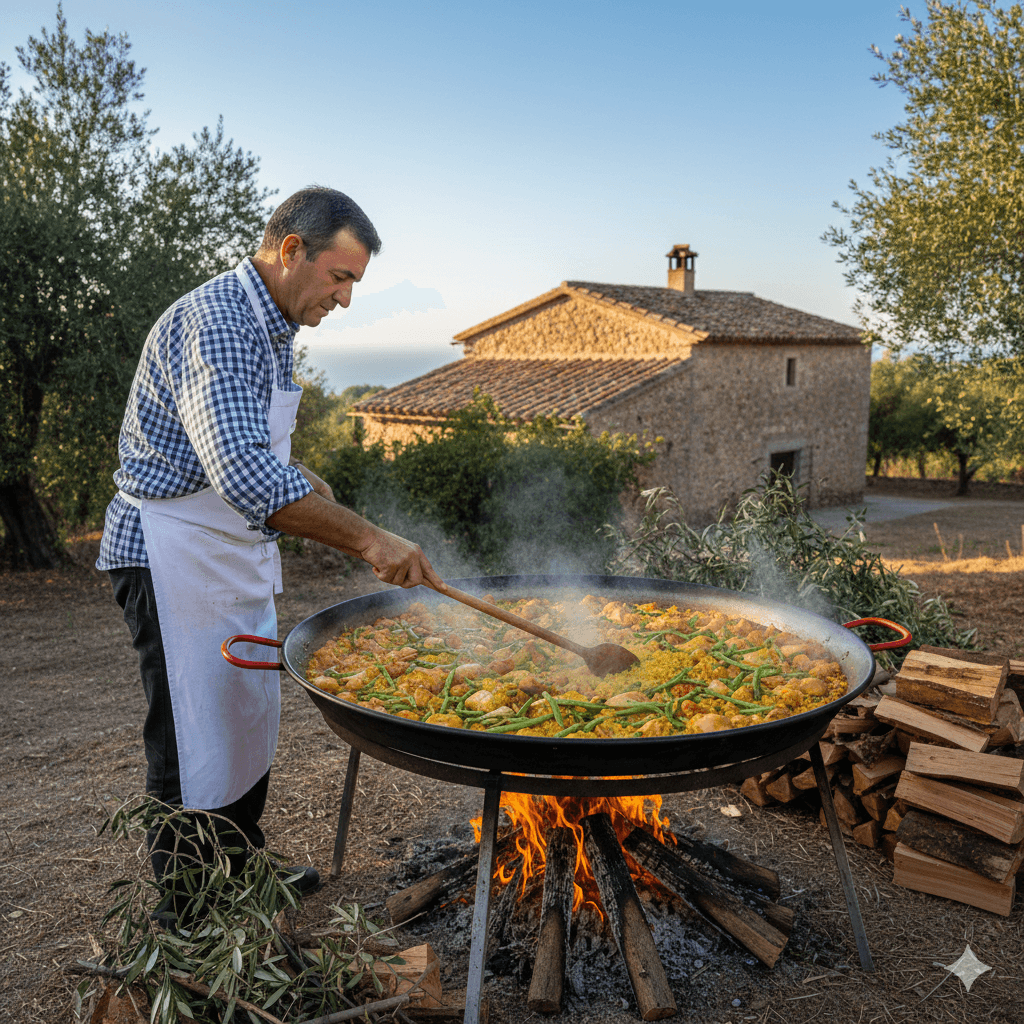
The dish Valencia is famous for. Traditional Valencian paella uses chicken, rabbit, green beans, garron beans, and sometimes snails — not seafood (that is paella de marisco, a different dish). Eating paella in Valencia is a weekend ritual, usually on Sunday. A good restaurant paella for one: EUR 12-15. Cooking at home with friends: EUR 3-4 per person.
Horchata and Fartons
Horchata is a cold drink made from tiger nuts (chufas), native to Valencia. Served with fartons — sweet, elongated pastries for dipping. Traditional horchaterias: Horchateria Daniel (Alboraya, the origin town), Santa Catalina (historic center), Horchateria El Siglo.
A glass of horchata with fartons: EUR 3-4. Essential summer drink.
Agua de Valencia
A cocktail made with cava, vodka, gin, and fresh orange juice. Created in the Cafe de las Horas bar. It is a tourist classic but genuinely good. Usually shared as a pitcher among friends. EUR 15-20 per pitcher, split four ways: EUR 4-5 each.
Esgarraet
A traditional Valencian salad of roasted red peppers, salted cod, garlic, and olive oil. Cheap to make at home, and one of the most distinctive local flavors.
All i Pebre
An eel stew from Albufera made with garlic, paprika, and potatoes. Hard to find cheap, but if you visit El Palmar, it is a must-try. Around EUR 10-12 per serving at traditional restaurants.
Monthly Food Budget Summary
Here is what a realistic monthly food budget looks like in Valencia:
Category | Tight (EUR) | Comfortable (EUR) | Eating Well (EUR)
Groceries | 80-100 | 120-160 | 160-200
Menu del dia (2x week) | 32-48 | 48-72 | 64-96
Cheap eats | 15-20 | 25-40 | 30-50
Coffee out | 10-15 | 15-25 | 20-35
Social dining | 0-10 | 20-40 | 40-80
Monthly total | 137-193 | 228-337 | 314-461
Most students land in the EUR 200-300 range per month for all food expenses. That is well below the European average for a student and gets you genuinely good food.
Related Resources
- Valencia Beaches, Parks, and Free Things to Do — More ways to enjoy Valencia on a budget
- Your First 90 Days in Valencia: From Arrival to Established — The complete settling-in timeline
- Get in touch — We help international students plan every aspect of their move to Valencia