Postgrad Spain
Valencia Public Transport: Metro, Bus, and Valenbici for Students
Valencia is one of the most navigable cities in Spain for students. The city is flat, compact, and served by an integrated public transport network that includes metro, tram, bus, and a public bike-sharing system. For most postgraduate students, a combination of a transit pass and a Valenbici subscription will cover every trip you need to make.
This guide covers each transport mode, the fare structures that matter for students, and the specific routes that connect to the main university campuses.
Metrovalencia: Metro and Tram
Metrovalencia operates both the underground metro and the surface-level tram. The network has nine lines connecting the city center with suburbs, the airport, and coastal towns.
Lines That Matter for Students
Line 1 (yellow): Runs north-south through the city center. Key stops include Angel Guimera (city center interchange), Turia (near the Turia gardens), and Benimaclet (student neighborhood and UPV access).
Line 3 (red): Connects the airport (Aeroport station) with the city center. This is the line you will use when you first arrive. From the airport to Xativa (city center) takes approximately 25 minutes and costs the standard Zone A fare.
Line 5 (green): Runs from Marítim-Serrería along the coast through Ayora and Alameda, connecting eastern neighborhoods. Useful for students living in Poblats Maritims.
Lines 4 and 6 (tram): Surface tram lines running through the university area along Avinguda de Tarongers and Avinguda dels Tarongers. Line 4 connects Mas del Rosari to Dr. Lluch, passing through the Universitat Politecnica and Universitat de Valencia Tarongers campus. These are the most student-relevant tram lines.
Fares and Passes
Pass | Price | Validity | Best For
Single ticket (Zone A) | 1.50 EUR | One trip | Occasional travel
Bonometro (10 trips, Zone A) | 7.60 EUR | Until used | Regular metro users
SUMA T1 (monthly, Zone A) | 44.00 EUR | Calendar month | Daily commuters
SUMA T2 (monthly, Zones A+B) | 62.00 EUR | Calendar month | Suburban residents
Jove card (under 30) | 50% discount on SUMA passes | Monthly | Students under 30
The Tarjeta Jove (youth card) is available to anyone under 30 and cuts the cost of monthly passes in half. To get it, visit a Metrovalencia customer service point at Xativa, Colon, or Angel Guimera stations with your passport or NIE and proof of age. The card is free to issue and activates immediately.
MOBILIS card: This is the rechargeable contactless card used across the Valencia transit network. It costs 2 EUR and can be loaded with single trips, bonos, or monthly passes. You can buy and recharge it at any metro station machine.
EMT Valencia: City Buses
EMT (Empresa Municipal de Transportes) operates the city bus network with over 60 lines covering Valencia and its metropolitan area. Buses run from approximately 5:30 AM to 11:30 PM on weekdays, with night bus service (buho) on weekends.
Key Bus Routes for Students
Line 41: One of the most student-used routes. Runs from Campanar through the city center to the Universitat Politecnica campus (full route takes about 40 minutes).
Line 71: Connects the city center (Plaza del Ayuntamiento) with the Blasco Ibanez campus area and continues to the beach at Malvarrosa.
Line 81: Links the main train station (Estacion del Norte) with the UPV Vera campus.
Line 31: Runs through Ruzafa, the city center, and up to Benimaclet, connecting two of the most popular student neighborhoods.
Bus Fares
Option | Price | Notes
Single ticket (on board) | 1.50 EUR | Cash or contactless card
Bonobus (10 trips) | 8.50 EUR | Loaded onto MOBILIS card
EMT monthly pass | 40.00 EUR | Unlimited bus trips
Combined SUMA pass | Included | SUMA passes cover both metro and bus
The SUMA monthly pass is the best value if you use both metro and bus, as it integrates both networks under a single payment.
Bus Tips
- Download the EMT Valencia app (available in English) for real-time arrival information and route planning
- Most bus stops now have digital displays showing estimated wait times
- Buses accept contactless bank card payment, so you can tap to ride even without a MOBILIS card
- Night buses (lineas buho) run Friday and Saturday nights with routes covering major nightlife areas
Valenbici: Public Bike Sharing
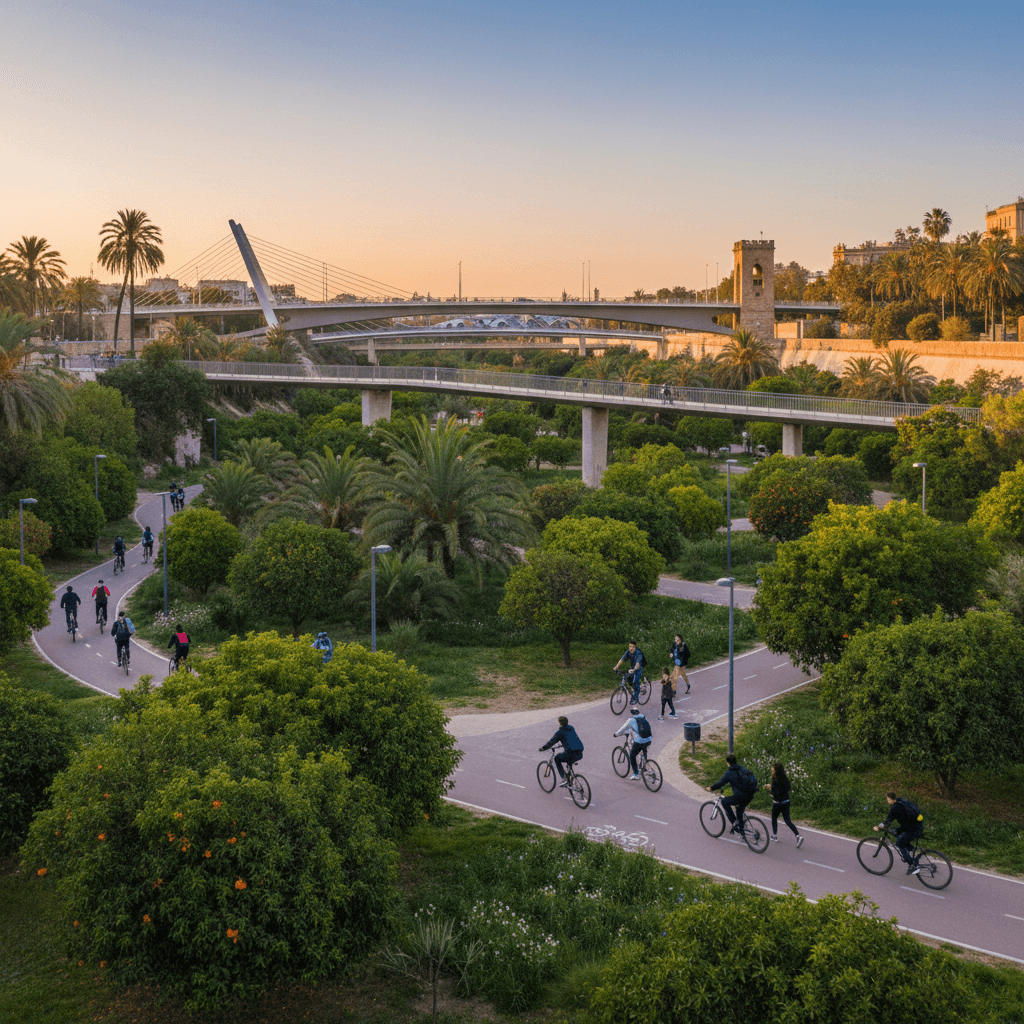
Valenbici is Valencia's public bike-sharing system with over 2,750 bicycles distributed across 276 stations throughout the city. Given that Valencia is almost completely flat and has an extensive network of bike lanes (carril bici), cycling is one of the most practical ways to get around.
How Valenbici Works
You register for a yearly subscription, which gives you unlimited 30-minute trips. If you exceed 30 minutes, additional charges apply, but since most trips across the city take 15-20 minutes, this is rarely an issue. You can pick up a bike at any station and return it to any other station.
Pricing
Plan | Price | Notes
Annual subscription | 29.21 EUR/year | Unlimited 30-min trips
First 30 minutes | Free (with subscription) | Per trip
30-60 minutes | 1.04 EUR | Additional charge
Each subsequent hour | 3.12 EUR | Discouraged for long holds
At under 30 EUR per year, Valenbici is one of the best transportation values in Europe. For a postgraduate student, this single subscription can replace most intra-city travel.
Registration
You can sign up at the Valenbici website or at their office on Plaza del Ayuntamiento. You will need:
- A Spanish bank account (for direct debit of the annual fee)
- A valid ID or NIE
The registration process takes 3-5 business days to activate. Plan for this in your first week.
Cycling Tips for Valencia
- Valencia has over 160 km of dedicated bike lanes, making it one of the most cycle-friendly cities in Spain
- The Turia gardens (Jardin del Turia) form a 9 km bike highway running through the city from west to east
- Bike lanes are generally well-maintained and separated from car traffic
- Always lock the bike back into a Valenbici station to avoid being charged for the full day
- The app shows real-time station availability so you can check for bikes or empty docks before walking to a station
Getting to the Airport
By metro: Line 3 connects Valencia Airport (Aeroport station) with the city center. Trains run every 15-20 minutes, and the journey to Xativa takes about 25 minutes. A single Zone A ticket (1.50 EUR) covers the trip. This is the cheapest and most reliable option.
By bus: EMT Line 150 runs between the airport and the city center, though less frequently than the metro.
By taxi: A taxi from the airport to the city center costs approximately 15-22 EUR depending on your exact destination and the time of day. There is a supplement for airport pickups.
Intercity Travel from Valencia
For weekend trips and exploring Spain beyond Valencia:
Renfe Cercanias (commuter rail): Connects Valencia with nearby towns like Sagunto, Gandia, and Xativa. Useful for beach trips and day excursions. Fares are low (2-6 EUR for most destinations).
Renfe AVE and Larga Distancia: High-speed and long-distance trains connect Valencia's Estacion Joaquin Sorolla with Madrid (1h 40min), Barcelona (2h 50min), and Seville (4h). Book early on the Renfe app for the best fares.
ALSA and Flixbus: Long-distance buses are often the cheapest option for intercity travel. The Valencia bus station (Estacion de Autobuses) is located on Avinguda de Menendez Pidal and serves routes across Spain and into Portugal and France.
Ryanair and Vueling: Valencia Airport has budget airline connections to dozens of European destinations. Booking 4-6 weeks in advance can get you flights for under 30 EUR each way.
Building Your Transport Strategy
For the typical postgraduate student in Valencia, the optimal transport setup is:
- MOBILIS card with SUMA T1 monthly pass (22 EUR/month with Jove discount) for metro and bus
- Valenbici annual subscription (29.21 EUR/year) for daily cycling
- Walking for anything within 20 minutes
This combination covers virtually every trip you will make during your studies and costs under 25 EUR/month, making Valencia one of the cheapest cities in Spain for student transportation.
Learn more about budgeting for Valencia in our cost-of-living comparison to see how transport costs fit into the bigger picture.