 Postgrad Spain
Weekend Trips from Your University City: Budget-Friendly Destinations in Spain
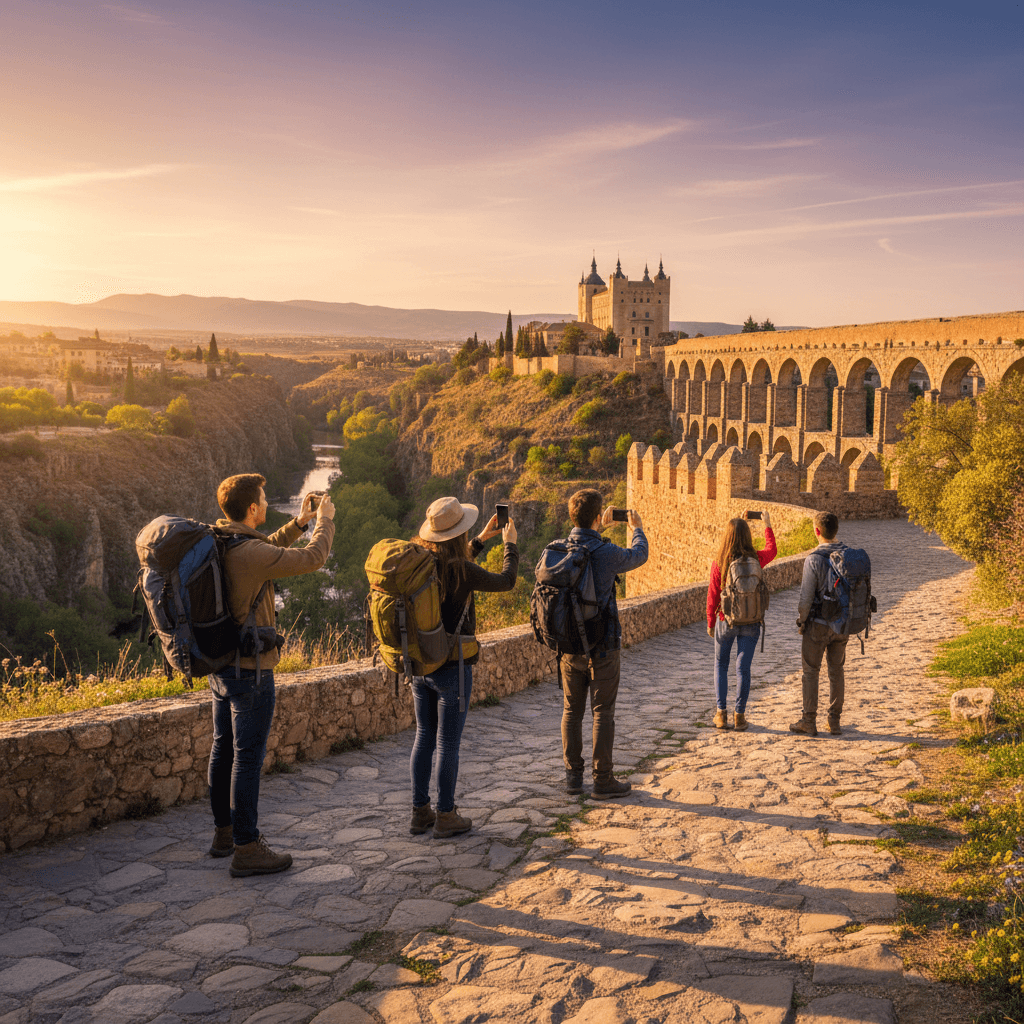
One of the best things about studying in Spain is that you are never far from somewhere extraordinary. A medieval city, a coastline, a mountain village, a UNESCO World Heritage Site — most of them are a short, cheap bus or train ride from wherever your university is.
And unlike some countries where weekend travel requires serious planning and serious money, Spain has a transport network and price structure that makes spontaneous getaways genuinely affordable on a student budget.
This guide covers the best weekend destinations from the three cities where most international postgraduate students are based: Madrid, Barcelona, and Valencia. Every destination here is reachable for under EUR 20 one way, and most for under EUR 15.
How to Travel Cheap in Spain
Before we get into specific destinations, here are the transport options that will save you the most money.
Budget Train Options
- Avlo: Renfe's low-cost high-speed train. Tickets from EUR 7 for routes like Madrid-Valencia, Madrid-Barcelona, or Madrid-Seville. Book early on the Renfe app — prices go up fast
- Ouigo: French low-cost high-speed operator running Madrid-Barcelona, Madrid-Valencia, and Madrid-Zaragoza. Tickets regularly start at EUR 9
- Cercanías: Renfe's commuter rail network. Covers short-distance trips around major cities for EUR 2-5. Perfect for day trips to nearby towns
- Media Distancia: Regional trains connecting mid-sized cities. Affordable but slower
Budget Bus Options
- ALSA: Spain's largest bus company. Student discounts available with their loyalty card. Madrid-Toledo from EUR 5.50 one way
- FlixBus: Pan-European budget bus with Spanish routes. Sometimes even cheaper than ALSA on popular routes
- Avanza: Strong in central Spain and the Madrid corridor
Car Sharing
- BlaBlaCar: Extremely popular in Spain. Often the cheapest option for routes not well served by trains. You ride with a driver heading your way, typically paying EUR 5-15 for a 2-3 hour trip. Also a good way to meet people
Pro Tips for Student Travel
- Book trains 30-60 days in advance for the lowest prices on Avlo and Ouigo
- Travel on Tuesday or Wednesday for the cheapest fares
- Use the Renfe Joven card (for under-30s, EUR 50/year) for 30% discount on all Renfe trains
- Check round-trip prices — sometimes booking return separately is cheaper, sometimes not
- Consider overnight buses for longer routes to save on a night of accommodation
Weekend Trips from Madrid
Madrid's central location makes it the best base for weekend travel in Spain. You can reach a dozen fascinating cities in under two hours.
Toledo (30-60 min)
The "City of Three Cultures" — where Christian, Muslim, and Jewish heritage overlap in a labyrinth of narrow streets, ancient synagogues, mosques, and churches.
- Getting there: Bus from Plaza Elíptica (ALSA, EUR 5.50 one way, every 30 min) or Avant train from Atocha (EUR 7-13, 33 min)
- What to see: The Cathedral, Alcázar, Museo del Greco, Puente de San Martín, the entire old town (UNESCO World Heritage)
- Budget tip: Toledo is best as a day trip. Wander the old town, eat a menú del día for EUR 12, and take the evening bus back
- Estimated day cost: EUR 25-35 (transport + food)
Segovia (60-90 min)
Famous for its Roman aqueduct, fairy-tale castle, and roast suckling pig. One of the most photogenic small cities in Europe.
- Getting there: Bus from Moncloa (La Sepulvedana, EUR 8 round trip) or AVE from Chamartín (EUR 12-15 one way, 27 min)
- What to see: The Aqueduct (free, jaw-dropping), Alcázar (the castle that allegedly inspired Disney), the Cathedral, and the Jewish Quarter
- Budget tip: Skip the cochinillo (roast pig) restaurants near the aqueduct — they are tourist traps. Walk up to the residential streets for the same dish at half the price
- Estimated day cost: EUR 30-40
Ávila (60-90 min)
A walled medieval city that feels like stepping into a time machine. The best-preserved medieval walls in Europe encircle the entire old town.
- Getting there: Bus from Estación Sur (EUR 8-10 round trip) or Media Distancia train from Chamartín (EUR 8-12, 90 min)
- What to see: Walk the walls (EUR 5 entry, worth every cent), the Cathedral, Basílica de San Vicente, and the Cuatro Postes viewpoint
- Budget tip: Combine with a stop in El Escorial on the way back if you rented a car or arranged a BlaBlaCar
- Estimated day cost: EUR 25-35
Salamanca (Weekend Trip, 2.5 hours)
Spain's most beautiful university city, with golden sandstone buildings, two cathedrals, and a student nightlife scene that rivals Madrid's.
- Getting there: Avanza bus from Estación Sur (EUR 15-22 one way, 2.5h) or BlaBlaCar (EUR 10-14)
- What to see: Plaza Mayor (arguably Spain's most beautiful square), the University facade (find the frog), both cathedrals, Casa Lis art museum
- Stay: Hostels from EUR 18-25/night. This one deserves an overnight stay
- Estimated weekend cost: EUR 60-90 (transport + hostel + food)
Cuenca (Weekend Trip, 2-3 hours)
The hanging houses alone are worth the trip. A small, dramatic city perched on the edge of a gorge.
- Getting there: AVE from Atocha (EUR 12-20 one way, 55 min) or ALSA bus (EUR 12-15, 2h)
- What to see: Casas Colgadas (Hanging Houses), the abstract art museum inside them, the Cathedral, and the gorge walk
- Estimated day cost: EUR 35-50
Weekend Trips from Barcelona
Barcelona has the unique advantage of combining city, coast, and mountains within an hour. Plus, France is right next door.
Montserrat (60 min)
A jagged mountain with a Benedictine monastery clinging to its rock face. Spiritually significant, visually stunning.
- Getting there: FGC train from Plaça Espanya to Monistrol de Montserrat (EUR 5.50), then cable car or rack railway up. The Tot Montserrat combo ticket (EUR 45) includes all transport + museum + lunch, but you can do it cheaper independently
- What to see: The monastery, the Black Madonna, the Sant Joan funicular hike (incredible views), the Montserrat Museum
- Budget tip: Bring your own lunch and skip the combo ticket. Train + cable car alone is about EUR 15 round trip
- Estimated day cost: EUR 20-35
Girona (40 min)
Colorful houses along the river, a Jewish Quarter that is one of the best preserved in Europe, and the cathedral steps from Game of Thrones.
- Getting there: Rodalies (Cercanías) train from Barcelona Sants (EUR 6-8 one way, 40 min to 1.5h depending on train) or Avlo/Ouigo (EUR 7-9, 37 min)
- What to see: The Cathedral, the Jewish Quarter (Call), the colorful houses on the Onyar river, the Arab Baths, and the city wall walk
- Budget tip: This is a perfect day trip. Eat at a local menú del día spot away from the old town for EUR 11-13
- Estimated day cost: EUR 25-35
Tarragona (60 min)
Roman ruins by the Mediterranean. If you are interested in history, this is one of the most underrated cities in Spain.
- Getting there: Cercanías train from Barcelona Sants (EUR 5-8 one way, 60 min) or Avlo (EUR 7, 35 min)
- What to see: The Roman amphitheater overlooking the sea, the old town, the Cathedral, Pont del Diable aqueduct, and the beach
- Estimated day cost: EUR 25-35
Sitges (30-40 min)
A charming seaside town south of Barcelona with beautiful beaches, whitewashed buildings, and a laid-back vibe.
- Getting there: Cercanías R2 from Barcelona (EUR 4-5, 35 min)
- What to see: The beaches (even in off-season, the seafront walk is gorgeous), the old town, the Maricel Museum
- Budget tip: Perfect half-day trip. Go in the morning, walk the seafront, have lunch at the port, and be back by late afternoon
- Estimated day cost: EUR 15-25
Weekend Trips from Valencia
Valencia is perfectly positioned between Madrid and Barcelona, with its own coastline and access to some of Spain's most underrated destinations.
Albufera Natural Park (20 min)
A freshwater lagoon just south of Valencia. The birthplace of paella.
- Getting there: EMT bus 24 or 25 from Valencia center (EUR 1.50, 20 min) or bike along the dedicated path
- What to see: Boat ride through the lagoon (EUR 5), rice paddies, sunset from the embarcadero, the village of El Palmar
- Budget tip: This is where locals go for authentic paella. Restaurants in El Palmar serve the real thing for EUR 12-15 per person
- Estimated day cost: EUR 15-25
Xàtiva (40-60 min)
A small town with a spectacular hilltop castle and a disproportionate amount of history (two Borgia popes came from here).
- Getting there: Cercanías train from Valencia Nord (EUR 4-5, 45 min)
- What to see: The Xàtiva Castle (sprawling hilltop fortress with views across the entire valley), the old town, the Collegiate Church
- Budget tip: Bring water and snacks for the castle walk — it is a solid uphill hike with limited vendors at the top
- Estimated day cost: EUR 15-25
Peñíscola (2-2.5 hours)
A castle jutting into the Mediterranean on a rocky peninsula. It was the seat of a rival Pope in the 15th century and looks like something from a fantasy novel.
- Getting there: ALSA bus or Cercanías (EUR 8-12 one way, about 2h)
- What to see: The Castle of the Pope, the old town, the beaches on either side of the peninsula
- Stay: If you make it a weekend trip, hostels and guesthouses from EUR 20-30/night
- Estimated weekend cost: EUR 50-80
Morella (3 hours)
A medieval walled town in the mountains of Castellón. Dramatically perched on a hill, with a Gothic church and a castle ruin at the summit.
- Getting there: Best by BlaBlaCar (EUR 10-15) as public transport options are limited and slow
- What to see: The castle, the Basílica Arciprestal, the medieval town gates, the aqueduct
- Budget tip: Combine with Peñíscola for a weekend route through Castellón province
- Estimated weekend cost: EUR 60-90 (with BlaBlaCar and basic accommodation)
The Student Weekend Budget: EUR 50-100
Here is a realistic weekend trip budget for a student in Spain:
Category | Day Trip | Overnight (1 night)
Transport (round trip) | EUR 10-25 | EUR 15-35
Food | EUR 12-20 | EUR 25-40
Accommodation | EUR 0 | EUR 18-30 (hostel)
Activities/entry fees | EUR 0-10 | EUR 0-15
Total | EUR 22-55 | EUR 58-120
Most university cities also have student travel clubs and student associations that organize group trips at even lower prices, since they can negotiate group discounts on transport and accommodation.
Practical Tips for Student Weekend Travel
- Pack light: A backpack is all you need. Spanish weekend trips do not require checked luggage
- Bring a reusable water bottle: Spain has excellent tap water in most cities. Save money and plastic
- Download offline maps: Google Maps allows you to download maps for offline use. Essential in small towns where mobile data can be spotty
- Learn three Spanish phrases: "¿Dónde está...?" (Where is...?), "La cuenta, por favor" (The check, please), and "¿Cuánto cuesta?" (How much does it cost?). These will get you through most situations
- Eat the menú del día: Available at lunch in almost every restaurant in Spain. A full meal (starter, main, dessert, drink) for EUR 10-13. This is how you eat well on a student budget. Read more in our guide on food and grocery shopping in Spain
- Travel with classmates: Splitting BlaBlaCar and accommodation costs makes everything cheaper, and shared experiences are part of what makes studying abroad memorable
Key Takeaways
- Spain's transport infrastructure makes weekend trips affordable and easy, with trains and buses from EUR 5-15 one way
- From Madrid, you can reach Toledo, Segovia, and Ávila for under EUR 35 for a full day trip
- From Barcelona, Montserrat, Girona, and Tarragona are all under an hour and under EUR 35 for the day
- From Valencia, the Albufera, Xàtiva, and Peñíscola offer beach, castle, and nature experiences at student-friendly prices
- Budget train services (Avlo, Ouigo) and car sharing (BlaBlaCar) are your best tools for cheap travel
- A realistic weekend budget is EUR 50-100, including transport, food, and accommodation
Studying in Spain is about more than your degree. The country you are living in is one of the most diverse and historically rich in Europe. Take advantage of the weekends to explore it.
At Postgrado España, we help you make the most of your time in Spain — starting with choosing the right program and city for your goals. Talk to us and let's start planning.


